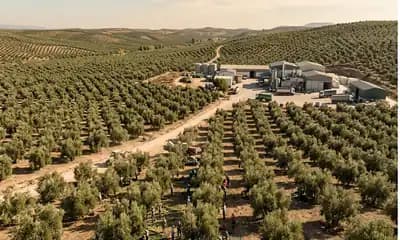
European Spring Barley Faces Weather Exposure Despite Adequate Stocks

May 21, 2026
˜ Prakhar Panchbhaiya
- Barley prices are rangebound in mid-May but remain highly headline sensitive.
- European spring barley is only in early growth, leaving meaningful weather exposure.
- Black Sea origins stay competitive on zero Russian duties and steady Ukrainian offers.
- Australian feed barley futures are flat, with only a gentle upward slope into 2027.
- Feed and malting buyers can use current stability to secure second-half coverage.
The barley market has settled into a calm, rangebound pattern in the middle of May, even as the wider grain complex stays alert to weather and policy headlines. For feed compounders and maltsters, the current quiet offers a planning window, but the underlying balance carries enough uncertainty to warrant active coverage decisions.
Recent market commentary points to grain prices stabilising after an earlier downtrend, with the near term expected to remain rangebound but highly sensitive to news. Weather across the United States Plains, the Midwest, and Europe has been flagged as the critical variable, and speculative positioning leaves futures exposed to abrupt swings. Within that picture, European malting barley availability still looks adequate on paper, but the caution is that most spring crops are only in their early growth stages, which leaves significant exposure to weather related risk over the coming weeks. A relatively small spring barley acreage in the United Kingdom adds to the sense that there is limited flexibility if production falls short.
Request the Latest Barley Prices Data - Access Price Insights Now
Black Sea origins remain the competitive anchor of the export trade. Russian and Ukrainian programs have stayed strong, supported by zero Russian export duties and steady Ukrainian offers, keeping those origins attractive to buyers in traditional import markets. European balances are not tight, with comfortable stocks limiting any rally even as cautious old crop buying continues.
Price signals have been notably subdued. Australian feed barley futures have been quoted around the AUD 319.50/t for May 2026 and AUD 327.00/t for July to November 2026, with the wider curve showing only a gentle upward slope into 2027 and beyond. Nearby contracts were largely unchanged through late April, and deferred months gained only marginally, underlining a very calm and thinly traded futures market. Black Sea cash offers for feed barley have likewise been broadly stable.
The risk balance is tilting mildly to the upside, with drought worries in some wheat areas, higher energy prices linked to the Middle East conflict, and Black Sea policy signals all providing support, while ample European stocks cap the move. For procurement, the prudent approach is to use the present stability rather than wait it out. Feed buyers across Europe and the wider region can layer in additional coverage for the third and fourth quarters while futures and Black Sea cash prices remain flat, focusing on deferred positions where the curve shows little carry. Close monitoring of European and Black Sea growing conditions through the spring will be essential, since an early weather scare could quickly remove the current calm.
Recent News & Articles

Methyl Vinyl Ether Buyers Review Regulatory Fit Before Supplier Approval
Feed Barley Procurement Tightens as Australian Output Is Expected to Drop

Diethyl Sulfate Procurement Requires Hazardous Substance Cost Checks

Castor Oil Procurement Needs Quality Review Before June Contracts
Zinc Sulfate Procurement Tightens as Zinc Rally Raises Supplier Offers
Tags
#Commodity Prices
#Commodity Prices
#Commodities#Commodities
#Industrial News#Industrial News
#Gold#Gold
#Chemicals#Chemicals
#Outlook for Potassium Carbonate#Outlook for Potassium Carbonate
#US Steel Scrap Prices#US Steel Scrap Prices
#USDA Milk Forecast#USDA Milk Forecast
#Cheese Prices#Cheese Prices
#Agriculture Raised#Agriculture Raised
- Access independent price trends and market intelligence for thousands of raw materials.
- Request customised production cost and prefeasibility reports for specific plants or locations.
- Explore subscription dashboards for continuous tracking of prices, indices, and news.
- Commission bespoke research on categories, suppliers, or trade flows tailored to your brief.
Our Team will be happy to assist you
We are Just a Text away