1,3-Propanediol Price Trend Price Trend Analysis 2026: Supply Demand Analysis, Market Insights, Price Drivers, Historical Prices & Latest News
1,3-Propanediol Price Trend 2025
Asia
In 2025, the 1,3-Propanediol (1,3-PDO) market in Asia experienced a mostly soft and irregular price trend. The market was challenged by weak demand from its downstream sectors like polymers, resins, and specialty chemicals. Moreover, weak industrial activity was experienced in associated petrochemical chains like propylene oxide and polypropylene. This resulted in low production costs, hence a lack of demand for 1,3 PDO-based products. China’s domestic production was robust, contributing to a build-up of inventory. This meant that the market was characterized by a lack of confidence throughout 2025. Overall, the 1,3 PDO market in Asia moved in a slightly downward trend throughout 2025.
Europe
In Europe, the price trend of 1,3-PDO in 2025 was stable to slightly weak. The market opened the year with good supply and moderate demand from end-use markets such as engineering plastics, coatings, and polyols. The economic environment was not favorable for the market due to the weak economic growth rate and the slowdown in the automotive and construction markets. The downstream markets of polyethers and polyols were also affected by excess capacity and increasing imports, thereby affecting the demand for 1,3-PDO. The stable feedstock and production levels prevented a sharp decline in prices; the market was just stable with little upward movement during the whole year.
North America
The 1,3-PDO market in North America exhibited a mixed but weak trend in 2025. Prices declined due to lower crude oil and propylene prices, which reduced production costs and put downward pressure on the market, especially during the mid-year period. Demand from the polypropylene, packaging, and consumer goods industries was also weak, which resulted in high inventories. In addition, trade tensions and rising crude oil inventories also put pressure on the market, especially during the mid-year period, as they reduced demand for 1,3-PDO. However, during the latter half of the year, tightening inventories provided support to the market, but demand from the polypropylene, packaging, and consumer goods industries was still cautious.
Analyst Insight
According to Procurement Resource, the 1,3-PDO prices could increase slightly, depending on the demand from the polypropylene, packaging, and consumer goods industries, as well as tightening inventories.
Related Report
Our Clients































Procurement Resource Database
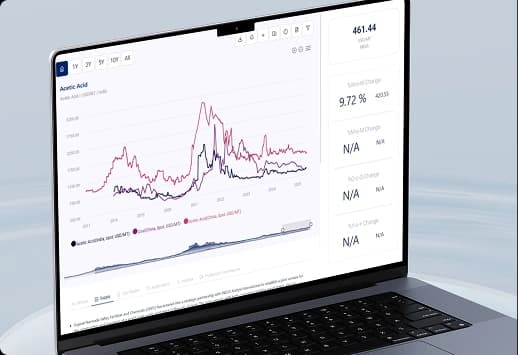
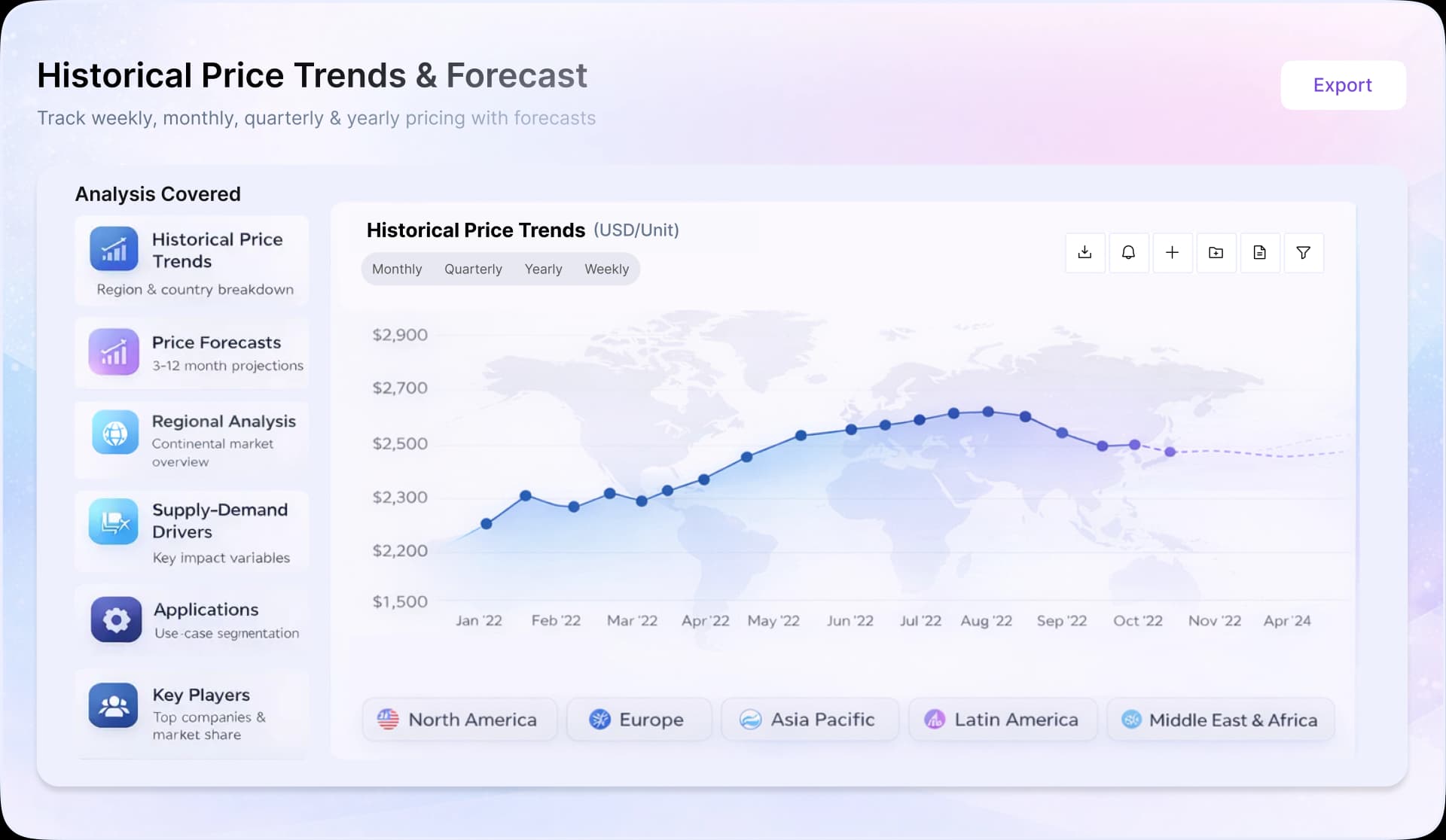
Turn price intelligence into action with the Procurement Resource Database. Log in or subscribe to unlock live price trends, historical charts, supplier databases, cost curves, and analyst-backed insights across chemicals, agriculture, energy, packaging, and more. Use these tools to benchmark your contracts, plan budgets with confidence, and stay ahead of market moves on every product you buy.
1,3-Propanediol Dashboard Inclusions
0
+Products
0
+Regions
0
+Subscriptions
Asia
In China, the 1,3-Propanediol price trend closely followed that of its primary feedstock, ethylene oxide, throughout 2024. At the beginning of the year, the market remained range-bound as supply and demand stayed relatively stable. However, in the second quarter, prices rose sharply due to higher feedstock costs and increased demand from the bioplastics and personal care sectors. This growth was further supported by logistical challenges and production delays at key chemical facilities. In the third quarter, prices declined alongside reduced supply and weaker buying activity. As the fourth quarter approached, demand waned, leading to a slight price decrease due to seasonal factors.
Meanwhile, in India, 1,3-Propanediol prices exhibited a mixed trend throughout the year. Prices generally increased until September, with intermittent periods of stabilization. However, from that point onward, the price trajectory shifted downward due to declining demand from downstream industries and weakening upstream markets, a trend that persisted until the end of the year.
Europe
Following the pattern of the Chinese market, the European 1,3-Propanediol market experienced a fluctuating trajectory. Initially stable, prices trended upward by the second quarter. This increase was driven by disruptions in the Red Sea, which led to higher freight rates, making shipments more expensive and causing supply chain delays. After this temporary surge, prices stabilized in the third quarter due to market corrections and steady production, with improved supply logistics providing support. However, as the year-end holiday season approached, demand declined, leading to a price decrease in the fourth quarter.
North America
The North American 1,3-Propanediol market followed trends similar to those in China and Europe. Initially, prices remained range-bound but saw a notable increase in the second quarter, driven primarily by rising international shipping costs. Increased demand from industries such as cosmetics, polymers, and coatings also contributed to this price rise during the period. However, after peaking, supply chains adjusted, bringing stability in the third quarter. Toward the end of the year, prices fluctuated within a narrow range due to the seasonal slowdown.
Asia
The Asian countries reported oscillations in the price trend of 1,3-propanediol all through the third quarter as the industrial activities slowed down in the initial phase. The surge in appreciation of Asian currency as compared to the US dollar raised the profit gains from the overseas industries. However, the demand from the domestic industries remained subdued and thus increased the concerns of the traders.
The inventories, however, were at an all-time low, which stabilized the trajectory, but on the advent of the fourth quarter, the supply chains regained momentum, and 1,3-propanediol prices began to gradually decline.
Europe
In Europe, despite the stable number of orders from the domestic and overseas industries, the elevated inventories prompted the traders to reduce their quoted prices of 1,3-propanediol, and thus, the 1,3-propanediol price trend declined during the third quarter of 2023.
The consumer base also seemed to be under the ill influence of the rising inflationary pressure and energy crises. The fourth quarter was also no different from the previous one, and the consistent negative perspective of the downstream industries, along with the contraction of the consumer spending budgets, eventually presented a downward sliding 1,3-propanediol price graph.
North America
The slowdown in the recovery rates of the US economy projected a negative influence on the 1,3-propanediol market and its price trend. The strong surge in the prices of energy production and hike in bank interest rates. The dull economic parameters eventually hampered consumer sentiments, and therefore, the traders noticed that the number of new orders was scarce throughout H2 of 2023, leading to a decline in the 1,3-propanediol prices.
Asia
The prices of 1,3-propanediol showcased a mixed trend in the first two quarters of 2023. The dipping prices of raw materials and dropping demand for the product negatively impacted the 1,3-propanediol market. The prices gained a little momentum in the second month of the first quarter with the increase in sales in the pharmaceutical and manufacturing sectors.
In the second quarter too, the prices rose slightly and then fell from April onwards. The supply of the product in the region became constrained as some of the manufacturing units had to shut down their production. In addition, the downstream demand declined significantly, and the market did not receive any support from the feedstock sector either.
Europe
In European markets, a consistently falling trend in the prices of 1,3-propanediol was observed. The prices were influenced by the weak performance of the feedstock prices and the slow movement of pharmaceutical and industrial sectors that caused the fall in the prices initially.
Along with this, the supply chain functioned at its peak in Europe amid the mild demand and led to the stockpiling of the product, which was a hassle for the traders. The traders thus looked for options to reduce the inventory levels, which forced them to decrease their market quotations.
North America
In North America, the prices of 1,3-propanediol showcased mixed sentiments in the first two quarters of 2023. The drop in the prices in the initial months was a direct result of the falling prices of feedstock material. But with low production rates and stable demand for 1,3-propanediol from the pharmaceutical, cosmetics, and related sectors, the prices rose. To aid this hike, the cost of crude oil rose in subsequent months, raising the overall cost of production and, in turn, the prices of 1,3-propanediol.
Asia
After a fine run in H1 2022, the 1,3-Propanediol market declined in H2 2022. As covid restrictions eased down and discounted Russian oil had access to major Asian markets the feedstock acrylic acid prices also reduced considerably. Supply chains were restored, and upstream costs were reduced. Prices for 1,3-Propanediol also followed. Overall, market sentiments were mixed as downstream demands also didn’t rise much to aid the 1,3-Propanediol price trend.
Europe
H2 2022 for Europe remained affected by the global economic slowdown, inflation didn’t only affect the manufacturing sector, but also the consumer purchasing capacity. So, the end consumer demands in most sectors faced a plunge. For the 1,3-Propanediol market, though the supplies improved with restored supply chains and eased covid restrictions in China, energy prices didn’t. Downstream polyester, adhesive, lubricant, and other industries reported declining demands. Overall, the economic peril for Europe didn’t sit very right with the 1,3-Propanediol market.
North America
Like the European region, the downstream demand remained a major driving factor in the North American 1,3-Propanediol market. As the energy prices and supply chains supported upstream costs, the feedstock acrylic acid prices increased, however, no parallel rise in 1,3-Propanediol price was seen considering the falling demand. Many manufacturers reduced their production costs, but even with lowered production costs market demands didn’t grow at all. Feeble demands kept the market fluctuating.
Asia
The price trend of 1,3-Propanediol remained strong in the Asian arena during the first quarter. The soaring crude oil prices caused uncertainty in the market supply along with the production cuts from the industries. The market shortages amid the booming demand from the end-user industries kept the prices adrift. The cost of feedstock acrylic acid averaged 2860 USD/MT in the Indian market and around 2370 USD/MT in the Chinese domestic market.
However, the price trend for 1,3-Propanediol exhibited an oscillating pattern in the second quarter. The crude oil prices began to relax due to the increased shipments from Saudi Arabia. These supplies supported the renewed production after the upliftment of covid restrictions. The increased outputs helped streamline the market demand; hence the prices stabilized.
Europe
During the first quarter, despite the high feedstock prices, production cuts, and acute energy crisis, the 1,3-Propanediol prices soared owing to the strong demand from downstream sectors. However, this abnormal inflation caused by the European decision to stop the oil supply from Russia led to the stagnation of the European market. The prices plateaued and began to fall consistently due to the demand destruction and reduced buyers’ confidence owing to the rumours of a global recession
North America
The price trend of 1,3-Propanediol in the American market aligned with the global outlook. The acrylic acid feedstock prices soared during the first quarter and averaged 2180 USD/MT. However, the constricted market supply and shortages could not keep up with the demand dynamics. Due to this market mismatch, the prices stabilized and then plateaued in the US domestic arena.
About 1,3-Propanediol
1,3-Propanediol is a highly viscous colourless liquid which serves as an essential feedstock in several copolymerization reactions. It is miscible with water, and owing to its versatile properties; it is used in many industries, including antifreeze, cosmetics, and lubricants.
1,3-Propanediol Product Detail
C3H8O2
Antifreeze, Lubricants, Cosmetics, Medical products, Polymers
1,3-Dihydroxypropane, Trimethylene glycol
DuPont Tate & Lyle Bio Products Company, Zhangjiagang Glory Biomaterial Co., Ltd., Metabolic Explorer
Regional Coverage
Asia Pacific
Europe
North America
Latin America
Africa
CurrencyUS$ (Data can also be provided in local currency)
Supplier Database AvailabilityYes
Customization ScopeThe report can be customized as per the requirements of the customer
Post-Sale Analyst Support360-degree analyst support after report delivery
Note: Our supplier search experts can assist your procurement teams in compiling and validating a list of suppliers indicating they have products, services, and capabilities that meet your company's needs.
1,3-Propanediol Production Processes
- Production of 1,3-Propanediol via Hydroformylation; via Hydration
1,3-Propanediol is primarily produced via hydration of acrolein. Acrolein is treated with a solution of water and a weak acid (pH 4-5) to make 3-hydroxypropionaldehyde. The intermediate undergoes hydration in the presence of nickel catalyst to produce the desired product, i.e., 1,3-Propanediol.
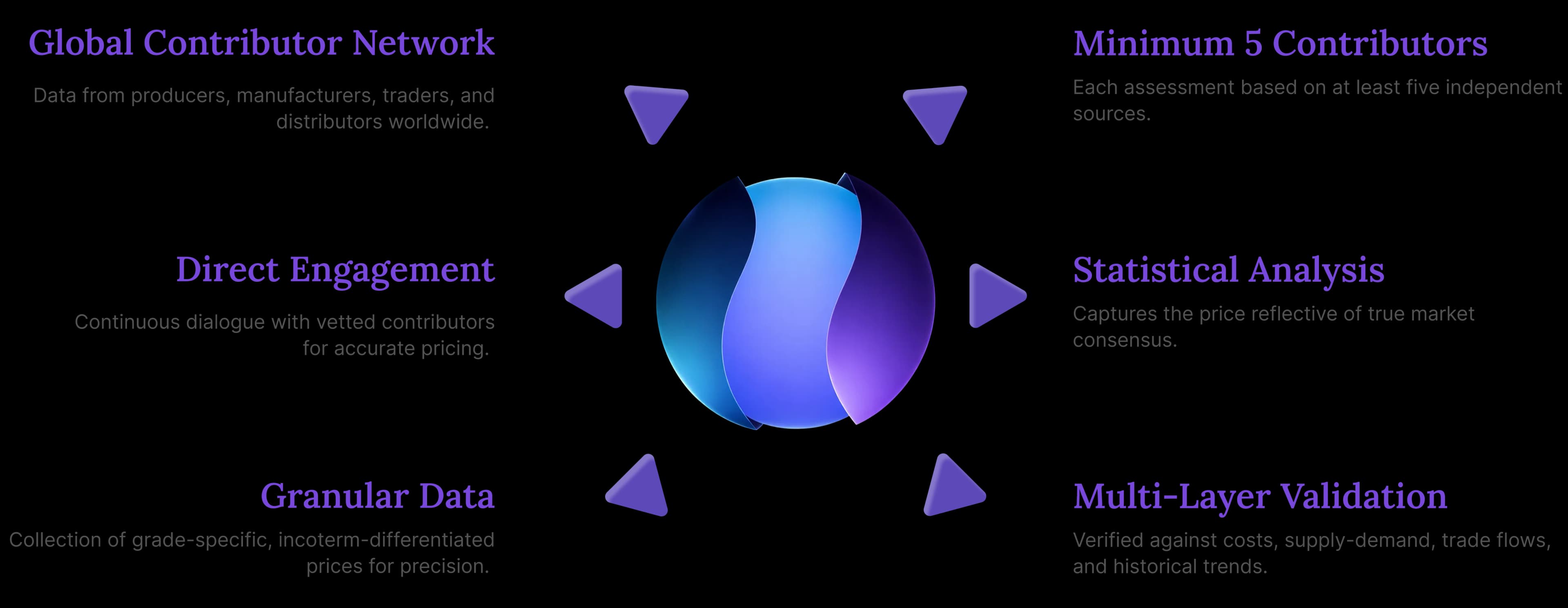
Our Price Analysis Methodology
Schedule A Demo
Experience how Procurement Resource transforms raw material price data into clear, decision ready intelligence. Optimise your performance with reliable, expert market data and analysis. Schedule your demo today to experience a live walk-through where our experts will showcase interactive price charts, forecasted prices, and insights driving the prices for your key commodities, tailored to your workflows. Contact us now!
Our Team will be happy to assist you
We are just a text away
Still Need Help ?
Subscription Plans
Unlock full access to Procurement Resource's price databases, interactive charts, and short-term forecasts for thousands of commodities. Elevate your sourcing decisions by comparing prices across regions, downloading historical data, and layering in analyst-backed insights, all with our flexible plans that scale as your portfolio grows.
Still have any Questions
Contact Us



Price Trend Dashboard - What's Included
Price trends across a diverse portfolio of categories amd products, spanning board to niche chemicas
Coverage extendable to grade-specific chemicals based on procurement requirements
Regular price tracking supported by robust historical datasets
News, policy updates, and key market drivers impacting price movements
Short-term and long-term price outlooks and forecasts
Supply–demand dynamics and capacity-driven market analysis
- Unlimited Users
- Historical Monthly Price
- USA, Europe, APAC Covered
- Monthly Forecast
- 12 Months validity
- News & Events
- 50 Products (Refer Next Page For List)
Why Procurement Database

Assistance from Experts
Throughout 2024, the Asian acetoin market experienced fluctuating trends with regional variations. Q1 began with moderate price increases driven by supply constraints from Chang Chun Plastics' maintenance shutdown in Taiwan. Post-S...

Client's Satisfaction
Throughout 2024, the Asian acetoin market experienced fluctuating trends with regional variations. Q1 began with moderate price increases driven by supply constraints from Chang Chun Plastics' maintenance shutdown in Taiwan. Post-S...

Assured Collaboration
Throughout 2024, the Asian acetoin market experienced fluctuating trends with regional variations. Q1 began with moderate price increases driven by supply constraints from Chang Chun Plastics' maintenance shutdown in Taiwan. Post-S...
Global Insights
Throughout 2024, the Asian acetoin market experienced fluctuating trends with regional variations. Q1 began with moderate price increases driven by supply constraints from Chang Chun Plastics' maintenance shutdown in Taiwan. Post-S...