Almonds Price Trend Analysis 2026: Price Drivers, Supply Demand Analysis, Latest News, Market Insights & Historical Prices
Almonds Price Trend Q1 2026
| Product | Region | Incoterm Basis | Price | Last Updated Month |
| Almonds | China | CIF | USD 1131/MT | April 2026 |
| Almonds | India | FOB | USD 10493/MT | April 2026 |
| Almonds | USA | CIF | USD 1,002/MT | April 2026 |
| Almonds | Brazil | CIF | USD 1,103/MT | April 2026 |
| Almonds | Canada | CIF | USD 1,063/MT | April 2026 |
| Almonds | China | CIF | USD 1,154.78/MT | March 2026 |
| Almonds | India | FOB | USD 10939/MT | March 2026 |
| Almonds | USA | CIF | USD 1023.13/MT | March 2026 |
| Almonds | Brazil | CIF | USD 1125.45/MT | March 2026 |
| Almonds | Canada | CIF | USD 1085.03/MT | March 2026 |
Stay updated with the latest Almonds prices, historical data, and tailored regional analysis
Almonds Price Trend 2025
In 2025, almond prices experienced significant volatility across global markets. Early in the year, prices in Uzbekistan rose sharply due to strong international demand and the risk of crop failures in Turkey. Exporters faced tight supplies, and assembling large shipments became challenging, which pushed domestic and international prices higher. Both local and imported varieties saw their price gaps narrow, as strong demand lifted all types to similar levels.
In the United States, the market experienced unusual instability. The release of the annual objective forecast by the Almond Board of California in mid-year caused a sudden price drop, as estimates for production were widely off from actual outcomes. This led to one of the largest single-day losses in recent history and caused widespread concern among growers. While production per acre was lower than expected, supply from existing stocks remained available, which helped moderate some of the losses, but the overall market remained uncertain for several months.
Buyers and processors benefited from the unexpected price movements, while growers faced financial strain. The sudden shifts highlighted the influence of trade policies, such as tariffs, and environmental factors, like frosts in major producing regions, on price dynamics. Overall, almond prices moved sharply up in early 2025 but faced sudden declines mid-year, ending the year with a cautious sentiment across major markets.
Related Report
Our Clients































Procurement Resource Database
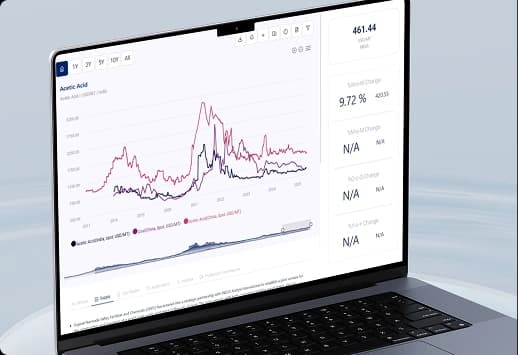
Turn price intelligence into action with the Procurement Resource Database. Log in or subscribe to unlock live price trends, historical charts, supplier databases, cost curves, and analyst-backed insights across chemicals, agriculture, energy, packaging, and more. Use these tools to benchmark your contracts, plan budgets with confidence, and stay ahead of market moves on every product you buy.
Almonds Dashboard Inclusions

0
+Products
0
+Regions
0
+Subscriptions
The prices of almonds followed an upward trend during the second half of 2024 in the Indian market. Initially, the market remained stable, with steady pricing as industry players awaited the arrival of the new harvest in August and September. When the new harvest entered the market, an increase in supply caused a brief dip in prices. However, within a few weeks, higher demand for almonds and other nuts led to a subsequent rise in prices.
The festival season in October and November further drove prices upward, maintaining the overall upward trajectory. Reduced imports and increased local consumption were key factors contributing to this bullish trend during the period. Although the prices of certain varieties, such as California almonds and Gurbandi badam giri, remained stable, the overall market experienced a rising trend. The Diwali festival and the wedding season in India during the winter months of the third and fourth quarters sustained high demand in domestic markets. Consequently, the prices exhibited an overall positive trajectory.
Almond prices were found to be range-bound for the most part of H1'24 in the global markets. Spain's almond exports showed mixed performance in early 2024. While February saw a strong rise in exports compared to the previous year, March saw a slight decline. Overall, total exports for the year have showcased borderline stagnancy.
Exports to France and Portugal increased slightly, while shipments to Germany and Turkey dropped by approximately 8% and 26%, respectively. Meanwhile, the 2024 crop estimate for Spain is projected at 130,000 metric tons, boosted by favorable conditions, though the 2023 crop was revised down due to drought, with some producers reporting as low as 80,000 metric tons. Despite lower production and high demand, almond prices are considered too low to cover production costs, causing financial strain for farmers. Overall, not much enthusiasm was found in the almonds market during the first half of 2024.
Almond prices were observed to be riding along a muddled trajectory throughout the second half of the year 2023. In the US market, quarter three’s performance was significantly poorer than that of quarter four. As the large ending stocks weighed on the markets just before the harvest season, according to some estimates, the prices even fell to a 20-year low in August.
The suppliers’ rush for stock clearance before the arrival of new stocks pushed the price graph down. However, this situation started reversing in September as the prices then started to climb back up as the demands started rising again, especially from the international markets. A strong shipping performance pushed the price trend up again, which was further fuelled by the shipping disturbances in the Red Sea. The fourth quarter witnessed a consistent surge in almond prices as the prices hit an eight-month high in December.
The prices of Californian Almonds shot up by 10% in the said period as the rupee depreciated drastically against the US dollar. To meet the rising demands for the upcoming festivities, the Indian government looked for cheap imports from Syria and Afghanistan.
In the USA, amid the labour shortages and truckers’ strike, the product flow through the Oakland port was disrupted causing logistical issues. Hence, the price trend for almonds soared dramatically globally during the said period.
Asia
Due to the delays in the shipment from California, India is looking for new contracts to meet its increased demands during the upcoming festive months. In contrast, the almond price trend in China on the lower side as a result of low market sentiments because of the Chinese New Year. However, the buyers are returning to the market but with limited buying capacity. Hence, prices are rising steadily as compared to any sharp increase.
North America
With over 96% of California experiencing drought-like conditions, the almond farming sector is immensely compromised. Its repercussions can be felt far and wide in the international market. Due to the increased shipping challenges and the labour shortage, California almond prices saw an upward trend. The average price of Californian almonds varies between 5.88 USD/kg and 6.02 USD/kg.
North America
Following record rainfall in California and a rise in the rate of shipments, worldwide almond prices fell in the first week of January. These two positive factors most likely contributed to the price drop. In December, California saw a lot of rain and snow, with the most of it falling in the last two weeks of the year. For March, almond prices were recorded at 1.99 USD/lb.
Asia
In the final quarter of 2021, almond harvest in Australia had been completed after a slow start due to heavy rains in the region. The shelling and hulling results show that the crop yields for 2021 were better than those of the previous year in terms of kernel and quality. The Australian Dollar was growing stronger and the global prices were low. New plantings had also been reduced.
The California market for the commodity was strong and the Covid-19 pandemic had caused major disruptions but in spite of that the exports were very high, being close to 80000 metric tonnes. The harvests in the southern and northern hemisphere were being consumed simultaneously which caused a market overlap. The domestic consumption had risen by 7% during the lockdown period.
Europe
The production was impacted in both Europe and America. Europe experienced more imports from United States and Australia. The production region is in Spain which produces more than half of the total produce in Europe even though most of the area is rainfed. The consumption in Europe had increased and inventories depleted.
North America
Drought issues still continued to affect the almond market in the US. The navel orange worms also were the major concerns in the final quarter of 2021. The demand for the commodity had increased. Crop receipts had been slow, almond prices were low, and dwindling stocks in Europe were bullish factors in the almond market. Along with this, there were other challenges like shipment problems and water supply issues.
Asia
China imported great quantities of almond as a result of the increasing demand from manufacturers in the food industry. Average almond prices in China in the first three quarters in 2021 was 3420 USD/MT. The imports in India also increased by nearly 20 percent, close to 130,000 tonnes. In the first quarter of 2021, almond prices in India were 3370 USD/MT.
The production in Australia rose by 14%, close to 145,000 tons. The major production regions in Australia are Sunraysia and Riverina, where the major water supply comes from the Murray River. Exports from Australia increased by 20% close to 900,000 tonnes amid high demands from Europe and China. In the first quarter of 2021, average almond prices in Australia were 4610 USD/MT.
Europe
In Spain and Italy, the production was down by 15%, close to 124,000 tons as the yields were cut due to frost. The imports were also lower than expected as consumption was low. Average almond prices in the first three quarters of 2021 in Spain was as low as 3040 USD/MT.
North America
The major concerns for almond producers in the US have been drought and insect damage. In the third quarter, the sellers in the US were cautious to sell their supplies due to anticipated droughts in future, which caused price hikes in the region. Almond prices rose from 3340 USD/MT in the first quarter to 4450 USD/MT in the third quarter of 2021. Other major challenges were shipping difficulties and delays in shipments.
Asia
China and India have been the major importers and key growth drivers in the almonds industry. The consumption had dropped during the pandemic but later picked up as the lockdown was lifted and the economies expanded. Their demand rose along with the increasing supply. Australia had seen a significant rise in the almond production and acreage in 2020 with the total production being 111,000 tonnes.
The major exports are sent to China and Hong Kong, after being grown mostly in the Murray-darling Basin region. The region however faces challenges such as limited availability of water resources. Australia is one of the chief competitors of California grown almonds in the international market. Their average price in Australia in 2020 was 3705 USD/MT.
Europe
Western Europe witnessed limited growth in almond production and export. The major importers of the commodity in Western Europe are Spain and Germany. Spain had earlier been a major exporter and producer but its production dropped due to less domestic demand.
Nonetheless, the market in Europe grew due to the rising demand for almond milk. The average price in Spain in 2020 was 4175 USD/MT. Almond prices fell in the first quarter due to the covid-19 pandemic but recovered by the end of the year 2020 as lockdowns were lifted.
North America
California is a largest producer of almonds in the US and one of the dominant players in the global market. In the recent decades, California’s almond industry witnessed major growth from a production of 2.8 billion pounds in the year 2020.
In 2020, the prices in California dropped to 1.83 USD/lb due to the numerous factors such as the disruptions caused by the Covid-19 pandemic which reduced the demand and consumption of almonds and the US-China trade dispute.
Gradually, the prices rebounded to pre-pandemic levels. They have mostly been stable in spite of the increased expansion in supply in both domestic and international markets.
About Almonds
The almond tree, also known as Prunus dulcis, is native to Iran and surrounding countries. The fruit of this tree is a drupe, comprising of an outer hull and a hard shell with the seed. The term almond generally refers to the edible and extensively cultivated seed of this tree. These seeds, that is, almonds, are a rich source of protein and their consumption may reduce the risk of heart disease, further offering several health benefits.
Almonds Product Detail
Snacks and Bars, Milk Substitutes and Ice Creams, Bakery and Confectionery, Nut and Seed Butters, RTE Cereals, Others
Blue Diamond Growers, Wonderful Pistachios & Almonds LLC, The Almond Company (Harris Family Enterprises), Mariani Nut Company, Panoche Creek Packing, Select Harvests Limited
Regional Coverage
Asia Pacific
Europe
North America
Latin America
Africa
CurrencyUS$ (Data can also be provided in local currency)
Supplier Database AvailabilityYes
Customization ScopeThe report can be customized as per the requirements of the customer
Post-Sale Analyst Support360-degree analyst support after report delivery
Note: Our supplier search experts can assist your procurement teams in compiling and validating a list of suppliers indicating they have products, services, and capabilities that meet your company's needs.
Almonds Production Processes
- Sorting of Almonds via Generic Industrial Process
Almonds, directly obtained from the almond tree, are filled in the receiving pit. From this pit, they make their way up a screw and spiral conveyor to screens that begin the process of removing dirt, sticks, and leaves from the almonds, thus sorting them and preparing them for further packaging and sales.
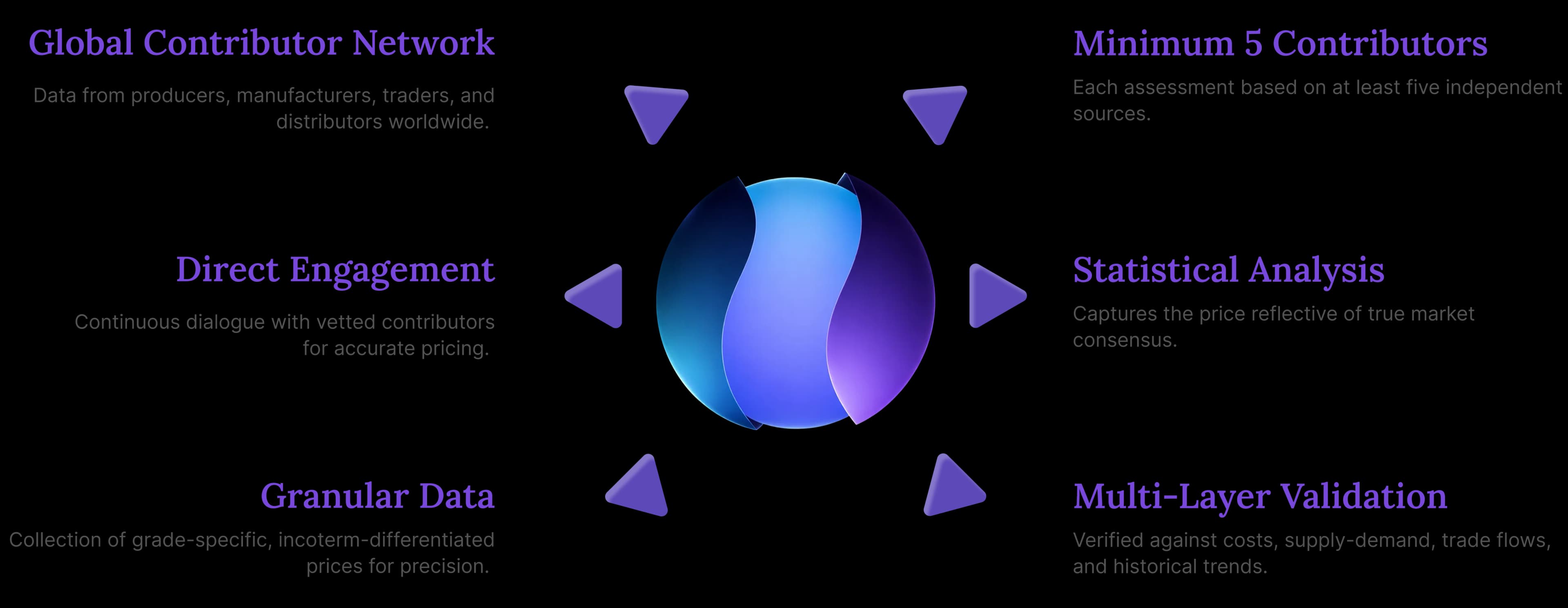
Our Price Analysis Methodology

Schedule A Demo
Experience how Procurement Resource transforms raw material price data into clear, decision ready intelligence. Optimise your performance with reliable, expert market data and analysis. Schedule your demo today to experience a live walk-through where our experts will showcase interactive price charts, forecasted prices, and insights driving the prices for your key commodities, tailored to your workflows. Contact us now!
Our Team will be happy to assist you
We are just a text away
Still Need Help ?
Other Related Reports
Chocolate Coated Almonds Production from Panning process
This report shows the cost structure of chocolate coated almonds production from the panning process. In this process, a large drum is used, which is set at a set rotation to avoid the spilling of inner material.
Vitamin B2 Production from Glucose
This study presents the production of vitamin B2 from glucose using the process of fermentation.
Subscription Plans
Unlock full access to Procurement Resource's price databases, interactive charts, and short-term forecasts for thousands of commodities. Elevate your sourcing decisions by comparing prices across regions, downloading historical data, and layering in analyst-backed insights, all with our flexible plans that scale as your portfolio grows.
Still have any Questions
Contact Us



Price Trend Dashboard - What's Included
Price trends across a diverse portfolio of categories amd products, spanning board to niche chemicas
Coverage extendable to grade-specific chemicals based on procurement requirements
Regular price tracking supported by robust historical datasets
News, policy updates, and key market drivers impacting price movements
Short-term and long-term price outlooks and forecasts
Supply–demand dynamics and capacity-driven market analysis
- Unlimited Users
- Historical Monthly Price
- USA, Europe, APAC Covered
- Monthly Forecast
- 12 Months validity
- News & Events
- 50 Products (Refer Next Page For List)
Related News
View All


Why Procurement Database

Assistance from Experts
Throughout 2024, the Asian acetoin market experienced fluctuating trends with regional variations. Q1 began with moderate price increases driven by supply constraints from Chang Chun Plastics' maintenance shutdown in Taiwan. Post-S...

Client's Satisfaction
Throughout 2024, the Asian acetoin market experienced fluctuating trends with regional variations. Q1 began with moderate price increases driven by supply constraints from Chang Chun Plastics' maintenance shutdown in Taiwan. Post-S...

Assured Collaboration
Throughout 2024, the Asian acetoin market experienced fluctuating trends with regional variations. Q1 began with moderate price increases driven by supply constraints from Chang Chun Plastics' maintenance shutdown in Taiwan. Post-S...
Global Insights
Throughout 2024, the Asian acetoin market experienced fluctuating trends with regional variations. Q1 began with moderate price increases driven by supply constraints from Chang Chun Plastics' maintenance shutdown in Taiwan. Post-S...