Argon Price Trend Analysis 2026: Historical Prices, Price Drivers, Latest News, Supply Demand Analysis & Market Insights
Argon Price Trend Q1 2026
| Product | Region | Incoterm Basis | Price | Time Period |
|---|---|---|---|---|
| Argon | China | FOB | USD 674.73/MT | April 2026 |
| Argon | India | CIF | USD 724.73/MT | April 2026 |
| Argon | USA | CIF | USD 761.73/MT | April 2026 |
| Argon | Germany | CIF | USD 800.73/MT | April 2026 |
| Argon | Canada | CIF | USD 764.73/MT | April 2026 |
| Argon | China | FOB | USD 642.60/MT | March 2026 |
| Argon | India | CIF | USD 697.60/MT | March 2026 |
| Argon | USA | CIF | USD 729.60/MT | March 2026 |
| Argon | Germany | CIF | USD 724.60/MT | March 2026 |
| Argon | Canada | CIF | USD 732.60/MT | March 2026 |
Stay updated with the latest argon prices, historical data, and tailored regional analysis
- The global argon market remained stable to slightly firm in Q1’26, supported by steady industrial activity and cost-driven pressures rather than strong demand expansion.
- Feedstock impact was led by energy costs, as argon production depends on power-intensive air separation units, keeping operating costs elevated.
- Downstream demand stayed moderate, with consistent consumption from welding, metal fabrication, electronics, and steel sectors.
Argon prices in Q1’26 followed a stable-to-firm trend across regions, primarily influenced by energy costs and steady industrial demand rather than supply disruptions. As argon is produced through cryogenic air separation, upstream cost pressure remained tied to gas and electricity markets, with continued volatility in global gas markets affecting production economics. Industrial gas producer price data in the U.S. remained active through March 2026, indicating sustained pricing support from cost-side factors. Demand from downstream sectors such as welding, stainless steel fabrication, and electronics remained stable, preventing price declines despite limited growth. In Asia and Europe, manufacturing activity and metal processing supported consumption, while weaker steel output limited stronger upward movement. The Iran war and Strait of Hormuz disruption had an indirect impact, increasing freight, fuel, and insurance costs, but did not significantly affect argon supply due to its localized production model.
Analyst Insight
According to Procurement Resource, argon prices are expected to remain steady with a slight upward bias, supported by energy costs, while demand growth remains moderate.
Related Report
Our Clients































Procurement Resource Database
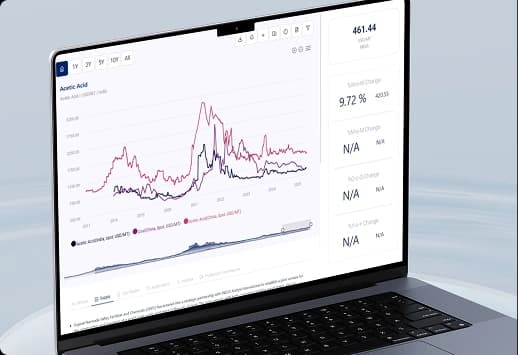
Turn price intelligence into action with the Procurement Resource Database. Log in or subscribe to unlock live price trends, historical charts, supplier databases, cost curves, and analyst-backed insights across chemicals, agriculture, energy, packaging, and more. Use these tools to benchmark your contracts, plan budgets with confidence, and stay ahead of market moves on every product you buy.
Argon Dashboard Inclusions
0
+Products
0
+Regions
0
+Subscriptions
Throughout 2025, prices of Argon saw moderate fluctuations in the major regions, primarily driven by consistent supply and varying industrial demand. In the European region, prices saw an overall trend of declining throughout the first half of the year, primarily due to subdued demand from the semiconductor, lighting, and specialty manufacturing industries. Consistent production levels, along with ample inventories, did not allow prices to escalate. Prices slightly stabilized during the second half, driven by increased activity from certain downstream sectors. Overall, however, market sentiment remained subdued throughout the period.
In the Asian region, the Argon prices maintained their consistent trend. At the beginning of the year, prices were firm due to consistent demand from industrial sectors, including food, chemicals, and electronic manufacturing. Seasonal influences, including cultural and holiday activities, saw prices slightly peak due to increased procurement. Later, prices slightly declined due to consistent supply, while inventories from downstream sectors were managed.
In North America, Argon prices largely held steady through the year. Domestic production and imports maintained balanced inventories, supporting consistent supply. While semiconductor and specialty industrial sectors drove steady consumption, no major surges or disruptions occurred, keeping prices stable. Buyers generally focused on routine procurement, and producers adjusted output efficiently to meet demand without overstocking.
Argon, a colorless and odorless gas, is widely used in industrial processes to create an inert atmosphere, such as in metal welding, where it protects the weld area from atmospheric gases like oxygen and nitrogen to prevent oxidation. Due to its versatile industrial applications, argon holds a crucial position in many high-precision industries. In recent months, argon prices have followed an upward trend, with regional variations observed in certain areas.
For instance, parts of Maharashtra, India, experienced supply shortages primarily due to a government directive during the pandemic that prioritized oxygen production over argon. This directive led key manufacturers to focus on oxygen supply, reducing the availability of argon and contributing to price increases.
In other major events, Air Liquide India has established a new manufacturing unit in Mathura, Uttar Pradesh, with an investment of ?350 crore. This air separation unit has a daily production capacity of 12 tonnes of liquid argon, along with 300 tonnes of liquid oxygen and 45 tonnes of liquid nitrogen. The increased production capacity is expected to ease the supply of argon, helping stabilize its rising prices.
Argon, a noble gas recognized for its inert properties, is extensively used in welding and casting, particularly for specialty alloys and titanium. It is also crucial in producing specialty glass and semiconductors. As the most abundant noble gas, comprising 1% of air, argon is economical and widely available. Its use in stainless steel production is gaining traction due to sustainability concerns. Additionally, argon is employed in space technology for satellite propulsion.
In early 2024, argon prices in Saudi Arabia fell, attributed to stable supply conditions. In contrast, Europe faced supply disruptions linked to the Red Sea crisis and the Russia-Ukraine war, severely affecting the global noble gas supply since Ukraine was a key exporter. This situation has prompted countries like Japan, South Korea, and Germany to boost domestic production.
As demand for argon grows and diversifies, its supply chain is evolving. It is increasingly replacing other noble gases, such as krypton and xenon, due to its affordability and ease of extraction through cryogenic distillation.
Argon is a noble gas frequently used in the welding process as it protects the welding region from airborne impurities and inhibits oxidation. Further, argon is also essential to the manufacturing of specialty glass and semiconductors. The developing manufacturing sectors, especially in the electronics and automotive industries, where inert atmospheres are essential for high-quality production processes, are the main drivers of the rising demand for argon.
Throughout the year, the supply chains of noble gases were under pressure from the aftereffects of the Russian-Ukraine crisis. The conflict in Ukraine disrupted global supplies of rare gases, which were critical for various industries like chipmaking, medicine, and space propulsion. Russia and Ukraine, major suppliers, previously accounted for 40-50% of global neon supply, 25-30% of xenon and krypton, and a similar percentage of argon.
In the third and fourth quarters, concerns arose about chipmaker disturbance due to the conflict, especially regarding shortages vital for semiconductor production. However, the crisis prompted chipmakers to look for reserves, invest in recycling technology, and explore alternative gases. In this jest, the air-separation plants with taps for rare-gas extraction emerged as a costly but viable solution to boost future supply.
Additionally, efforts in Japan and South Korea aimed to enhance domestic production and reduce reliance on imports, further contributing significantly to the stabilization of market supply chains. Upon the stabilization in the supply sector, the inflated prices of argon, along with other industrially potent noble gases, started to decline. Despite initial concerns, successful industry responses and rerouting of source plants, along with the adaptability of both producers and consumers, eventually led to a stagnant trend in the prices of argon.
Argon is a chemical element that is classified as a noble gas (inert gas). It is isolated on a massive scale through fractional distillation of liquid air, and when the temperature is lowered to below 186 degrees, it can be transformed into a colorless liquid. The largest region of argon production is Asia Pacific, followed by North America. The price trend of argon is majorly driven by its usage in spectroscopy, cryosurgery, airbag inflation, refrigeration, and other applications.
In the first two quarters of 2023, the price trend of argon remained volatile as the Russia-Ukraine war hampered the global recovery from the COVID-19 pandemic-related restrictions. The conflict between these two nations has resulted in supply chain interruptions, a rise in commodity prices, and economic penalties against other nations, which have all had an impact on various markets throughout the world.
Argon prices remained anchored during H2 2022. Q3 started with a rise while prices started stabilizing by the end of Q4. The third quarter witnessed problems with the production, transport, and storage of Argon which led to the incline in prices. But Q4 started with supply chain restoration and resumption of other industrial activities thereby, stabilizing the price trend. But the demand could not keep up, so the argon prices remained almost stagnant in the latter Q4 H2 2022.
All the key players in the gaseous market have increased the prices for bulk industrial gases, including Argon. Presently, the prices for Argon have been hiked around 15%, including the charges for delivery, material handling and other miscellaneous services.
This price increase was in line with the increasing energy and labour costs owing to the surging crude oil and natural gas prices. In the case of Argon, the rising costs of sourcing are also responsible for the price trend to strengthen globally.
About Argon
Argon is a chemical element in the eighteen group of the periodic table. It is a noble gas, the third most abundant gas in earth's atmosphere, besides Nitrogen and Oxygen. It is an odorless and colorless gas that does not react with other substances, has low thermal conductivity, and forms a few compounds under extreme conditions.
Argon is used whenever an inert atmosphere is required, like during the production of titanium, to shield the weld area, and in incandescent light bulbs to keep the filament from corroding due to oxygen. Argon has also been used as a surgical instrument in the medical field. Argon Plasma Coagulation (APC) is a non-contact technique that uses high-frequency argon plasma stimulation to cauterize surrounding tissues and control bleeding around surgical sites through coagulation.
Argon Product Detail
Ar
Welding and Casting, Healthcare, Food and Drink, Neon Lighting, Manufacturing, Scuba Diving
BASF, Eurochem, Praxair Air, Messer Group, American Gas Group
Regional Coverage
Asia Pacific
Europe
North America
Latin America
Africa
CurrencyUS$ (Data can also be provided in local currency)
Supplier Database AvailabilityYes
Customization ScopeThe report can be customized as per the requirements of the customer
Post-Sale Analyst Support360-degree analyst support after report delivery
Note: Our supplier search experts can assist your procurement teams in compiling and validating a list of suppliers indicating they have products, services, and capabilities that meet your company's needs.
Argon Production Processes
- Production of Argon from Atmospheric Air
Argon is industrially extracted from liquid air in a cryogenic air separation unit employing fractional distillation. The atmospheric nitrogen is heated using hot calcium or magnesium and a nitride is formed, leaving behind a small amount of Argon.
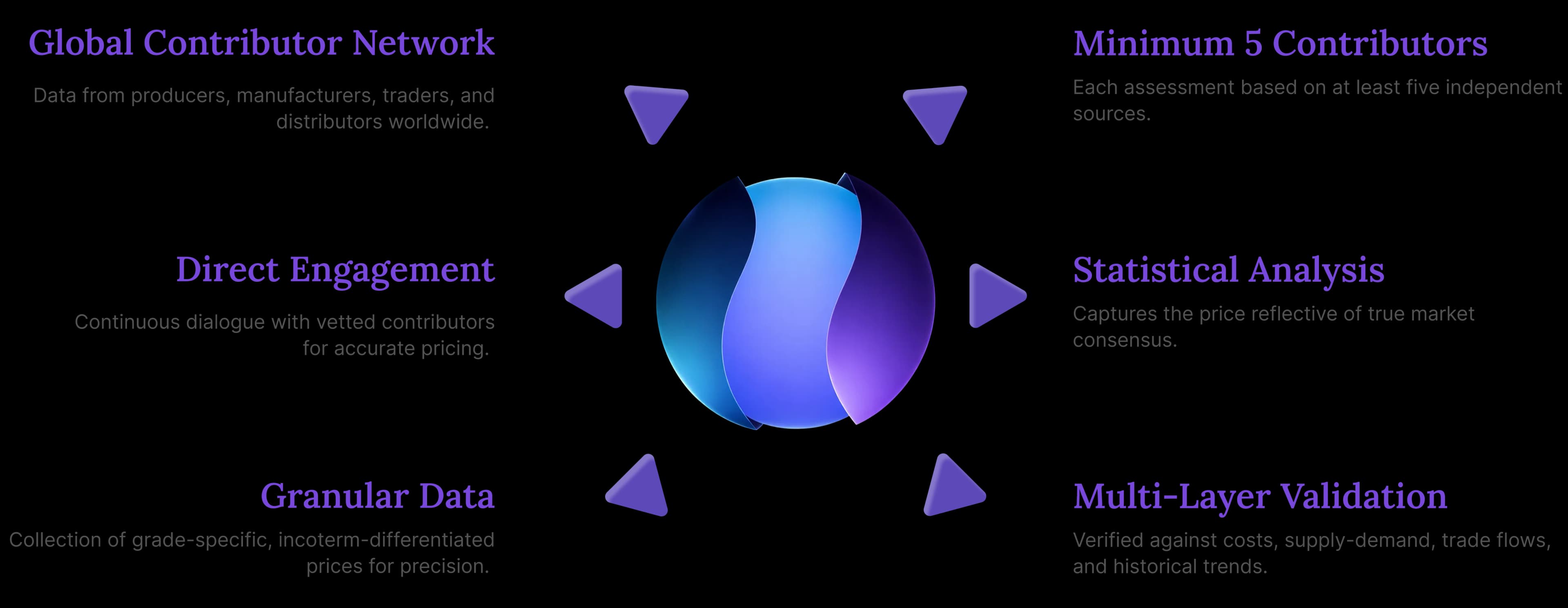
Our Price Analysis Methodology
Schedule A Demo
Experience how Procurement Resource transforms raw material price data into clear, decision ready intelligence. Optimise your performance with reliable, expert market data and analysis. Schedule your demo today to experience a live walk-through where our experts will showcase interactive price charts, forecasted prices, and insights driving the prices for your key commodities, tailored to your workflows. Contact us now!
Our Team will be happy to assist you
We are just a text away
Still Need Help ?
Subscription Plans
Unlock full access to Procurement Resource's price databases, interactive charts, and short-term forecasts for thousands of commodities. Elevate your sourcing decisions by comparing prices across regions, downloading historical data, and layering in analyst-backed insights, all with our flexible plans that scale as your portfolio grows.
Still have any Questions
Contact Us



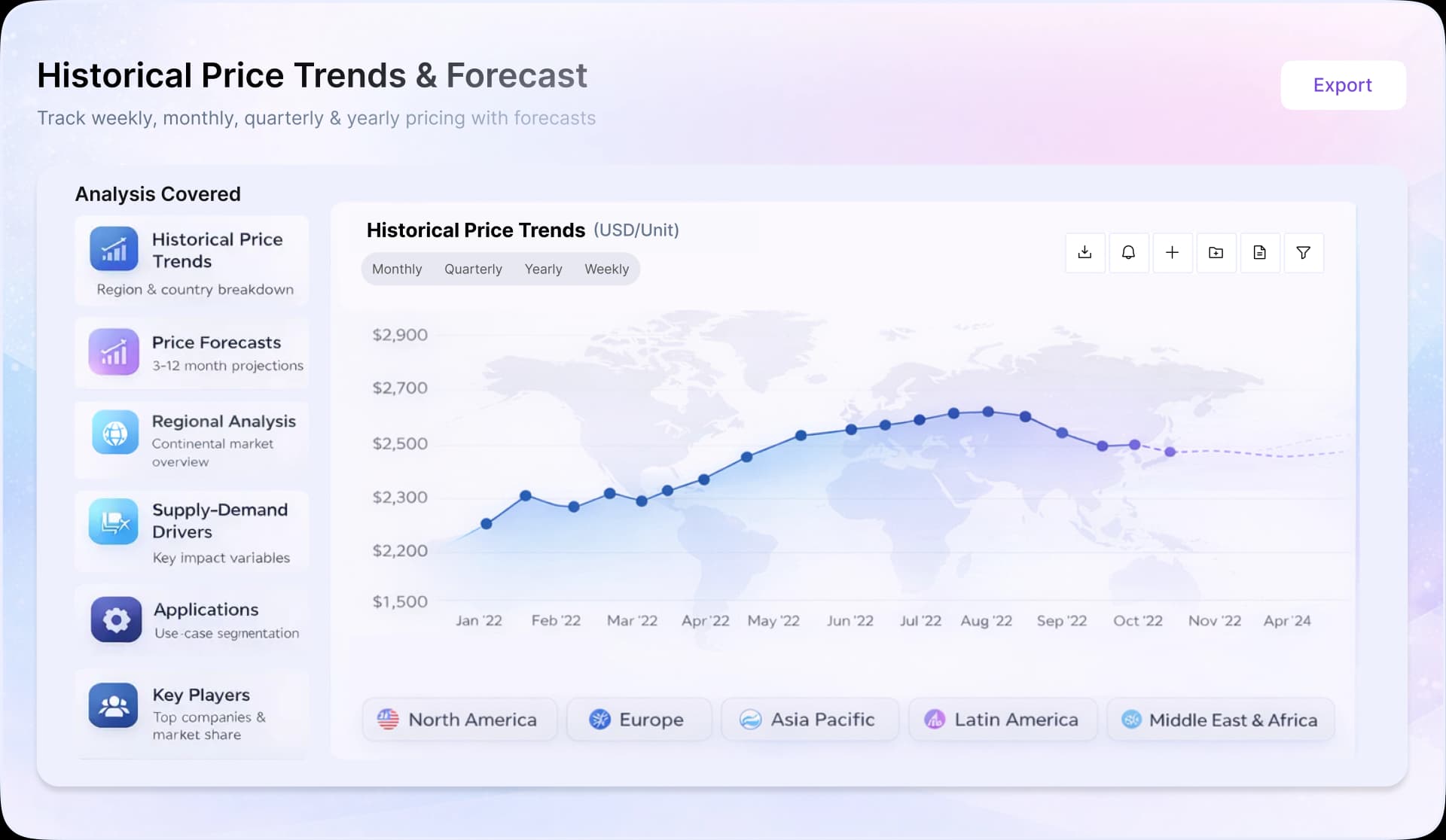
Price Trend Dashboard - What's Included
Price trends across a diverse portfolio of categories amd products, spanning board to niche chemicas
Coverage extendable to grade-specific chemicals based on procurement requirements
Regular price tracking supported by robust historical datasets
News, policy updates, and key market drivers impacting price movements
Short-term and long-term price outlooks and forecasts
Supply–demand dynamics and capacity-driven market analysis
- Unlimited Users
- Historical Monthly Price
- USA, Europe, APAC Covered
- Monthly Forecast
- 12 Months validity
- News & Events
- 50 Products (Refer Next Page For List)
Why Procurement Database

Assistance from Experts
Throughout 2024, the Asian acetoin market experienced fluctuating trends with regional variations. Q1 began with moderate price increases driven by supply constraints from Chang Chun Plastics' maintenance shutdown in Taiwan. Post-S...

Client's Satisfaction
Throughout 2024, the Asian acetoin market experienced fluctuating trends with regional variations. Q1 began with moderate price increases driven by supply constraints from Chang Chun Plastics' maintenance shutdown in Taiwan. Post-S...

Assured Collaboration
Throughout 2024, the Asian acetoin market experienced fluctuating trends with regional variations. Q1 began with moderate price increases driven by supply constraints from Chang Chun Plastics' maintenance shutdown in Taiwan. Post-S...
Global Insights
Throughout 2024, the Asian acetoin market experienced fluctuating trends with regional variations. Q1 began with moderate price increases driven by supply constraints from Chang Chun Plastics' maintenance shutdown in Taiwan. Post-S...