Calcite Price Trend Analysis 2026: Historical Prices, Latest News, Price Drivers, Market Insights & Supply Demand Analysis
Calcite Price Trend 2024
Asia
In Asia, calcite prices showed a mixed pattern throughout 2024. The first quarter began with an upward trajectory due to raw material shortages and production slowdowns coinciding with the Chinese Lunar New Year. By Q2, the market stabilized briefly before declining as China entered its off-season period, causing oversupply from high inventory levels and decreased construction activity.
The third quarter continued this downward pressure initially, but prices recovered slightly by quarter-end as weather disruptions and maintenance shutdowns restricted supply. The final quarter of 2024 saw calcite prices fall further, primarily due to weakening demand from the plastics sector and trade disputes, including India's anti-dumping investigation against Vietnamese imports.
Europe
European calcite markets experienced more positive trends in 2024. The year began with price increases driven by economic recovery and strategic investments across multiple sectors. This upward momentum continued through Q2 and Q3, though temporarily dampened during the summer holiday season when construction activity traditionally slows. By Q4, prices strengthened significantly as the construction sector's continued recovery boosted demand, particularly in residential and commercial segments. The implementation of updated Construction Products Regulations created additional pressure as manufacturers sought high-quality materials meeting new environmental standards. Logistics challenges, especially port congestion at major European hubs, further tightened supply and supported price increases.
North America
The North American calcite market exhibited stability with moderate fluctuations throughout 2024. The year began positively as distributors replenished inventories and construction activity remained robust. In the second quarter, prices oscillated due to shifting demand patterns and production adjustments. Q3 showed initial price declines due to muted industrial demand and production efficiencies, but the trend reversed late in the quarter as food and pharmaceutical sectors increased purchases.
The final quarter maintained relative stability, supported by balanced market fundamentals, consistent demand from paper and plastics industries, and improved operational efficiencies in domestic mining operations, though seasonal construction slowdowns provided some downward pressure.
Related Report
Our Clients































Procurement Resource Database
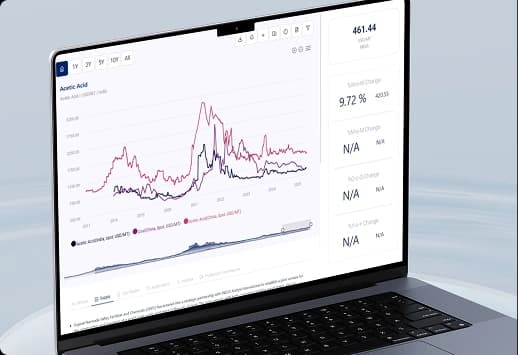
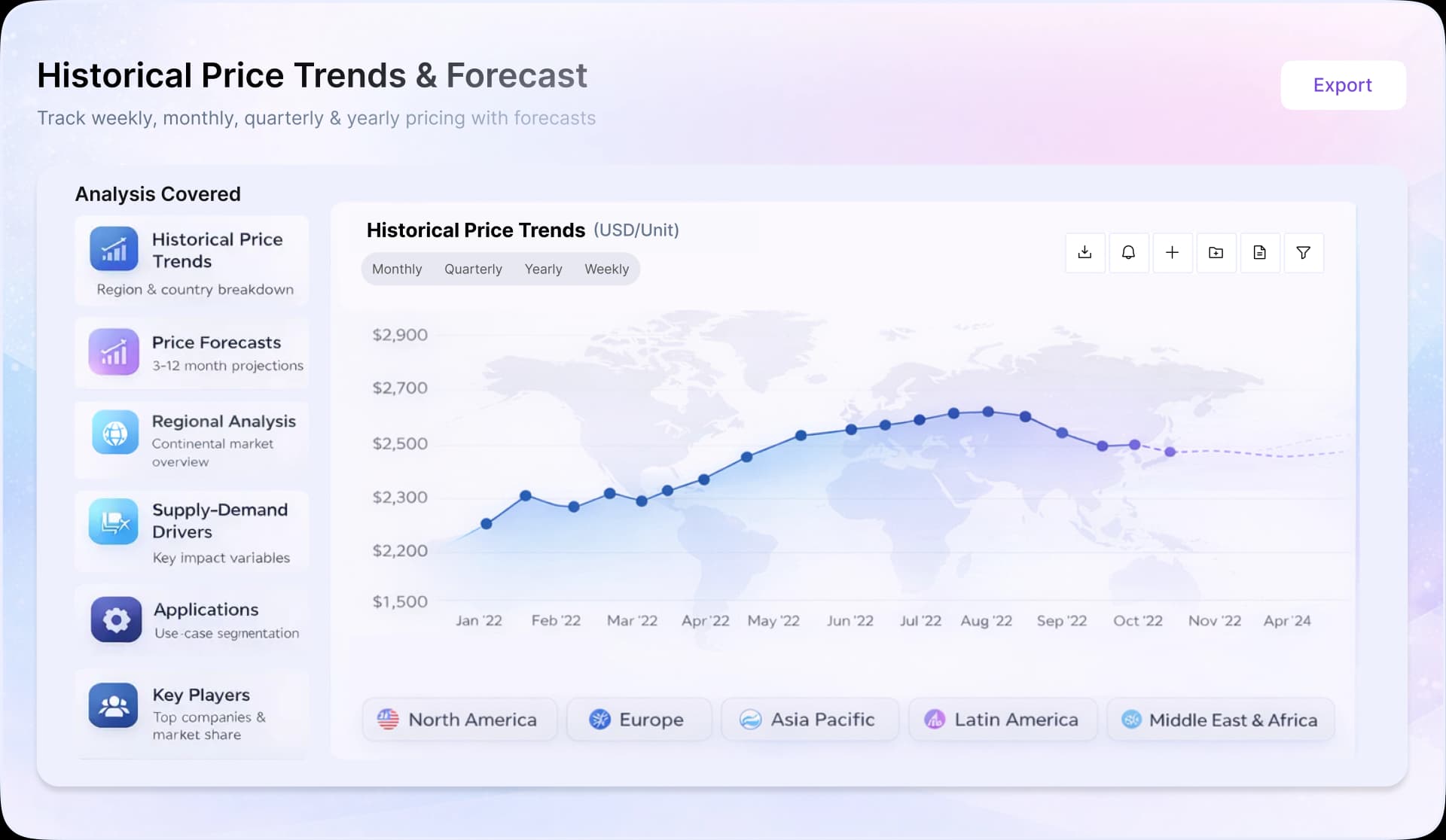
Turn price intelligence into action with the Procurement Resource Database. Log in or subscribe to unlock live price trends, historical charts, supplier databases, cost curves, and analyst-backed insights across chemicals, agriculture, energy, packaging, and more. Use these tools to benchmark your contracts, plan budgets with confidence, and stay ahead of market moves on every product you buy.
Calcite Dashboard Inclusions
0
+Products
0
+Regions
0
+Subscriptions
Asia
Mixed price sentiments were observed in the Asian market for Calcite in the first half of 2023. Prices had a good start in Q1 2023 owing to limited supplies since the slow manufacturing activities in the Chinese markets amidst the recovery period from the Covid-19 lockdown and Lunar New Year holidays added to the supply curtailments.
But as the manufacturing ramped up in mid-Q1, prices started declining as the inventories rose, and demands were very limited to accommodate this product overflow. Thus, the prices mostly declined from mid-Q1 till the end of the second quarter.
Europe
The European Calcite market appeared affected by rising inflation. As the purchasing behaviors changed because of the cost-of-living crisis in Europe, there were very few offtakes from the downstream and the end user sections. The upstream costs were unsustainably high. Around Q2, the upstream costs normalized, but the demands were still limited. Overall muted market sentiments were observed for Calcite amidst dull trade activities.
North America
Like other global markets, Calcite prices in the North American market were also driven by dull downstream demands. Q1 began with high inventory levels, and the stocks couldn’t clear up by the end of Q2. The production scale was cut to prevent excess oversupply, but the market sentiments remained bearish.
Asia
Owing to the reduced offtakes and muted market transactions the price of calcite suffered in the Chinese domestic market. With the economy still dealing with the aftermath of covid shutdowns, the construction sector suffered the most. The lowered construction activities coupled with the reduced prices of upstream pet coke added to the price decline of calcite. The enhanced supply/inventories and less demand disturbed the market equilibrium causing the price trend for calcite to decline during the said period.
Europe
Calcite prices kept volatile in the European region owing to the limited enquiries and the buffer supply in the market. Despite the rising costs, the market demand kept steady, hence the manufacturers were still able to make a profit.
North America
The price trend in the US closely followed the global outlook. The prices fell owing to the relaxation in the upstream supply and ease in logistics. Despite this ease, the market exhibited a dull trend due to the fears of recession. However, a momentary rise was seen in the calcite prices towards the end of the said period.
Asia
Due to fluctuating projections for demand from the building industry downstream, the price trend for calcite in Asia in the second quarter have been inconsistent. International trade has been significantly impeded by China's COVID laws, which has decreased the calcite market's value.
Furthermore, downstream cement prices have declined as a result of the slowdown in construction activity. Due to robust downstream demand, calcite price realisations in India surged at the start of Q2. But as the quarter came to a close, increased energy costs and a labour shortage lowered the market value of calcite on the domestic market.
Europe
Prices for calcite rose in the second quarter of 2022 along with the cost of key raw materials related to energy. The supply disruption brought on by the conflict between Russia and Ukraine seriously hurt Germany's economic activity. In April, the market experienced high demand from the construction sector, which increased the price of calcite in the core European economy.
However, as Q2 came to a conclusion, concerns about inflation and the rise in raw material prices made it difficult to predict the terminal demand for the downstream construction industry. The market scenario that has been observed indicates that there has been a severe reduction in construction projects.
North America
Prices for calcite skyrocketed in the first half of the second quarter of 2022 as a result of strong downstream demand. There was a limited supply of calcite as a result of the industrial sectors' decreased ability to function due to a lack of domestic labour. Prices for calcite were also significantly impacted by supply chain disruptions brought on by a scarcity of truck drivers. Furthermore, May saw a marked fall in building activity near the conclusion of Q2 as a result of ongoing supply disruptions of crucial input materials.
Asia
Domestic calcite prices in China grew from 331.27 USD/MT in mid-January to 332.02 USD/MT in the month's final week.
Europe
Omya International, a significant producer of calcite in Switzerland, declared a rise in the chemical's price due to increased input expenses such as raw materials, energy, packaging, shipping, and chemicals. Inflation in several nations and supply chain volatility both contributed significantly to the increase in calcite prices.
| Product | Category | Region | Price | Last Updated Month |
| Calcite | Energy, Metals and Minerals | Asia | 9677 USD/MT | Dec'2021 |
| Calcite | Energy, Metals and Minerals | North America | 9295 USD/MT | Dec'2021 |
Stay updated with the latest Calcite prices, historical data, and tailored regional analysis
Asia
In general, the Asia Pacific market remained stable throughout Q4 2021, thanks to appropriate cost support from the demand forecast and supply constraints in China. Dual-energy management, along with China's power limitation, compelled suppliers to cut factory run rates.
However, the situation improved somewhat in the second half, despite the fact that COVID's revival boosted demand in Asia's home market. As a result of the ripple effect, the FOB Qingdao calcite prices (USP grade) were valued at 9677 USD/MT in the December quarter.
Europe
In the fourth quarter of 2021, despite the supply-demand mismatch, the market sentiments in Europe remained buoyant. Operating loads remained stagnant in the face of Europe's protracted energy crisis which resulted in curtailed supply in the domestic market. Additionally, domestic firms were cautious to enquire from the international market due to the higher freight rates and restricted supply of freight boats. The return of COVID bolstered the domestic market in Europe.
North America
The market activity was muted in the North American area during the fourth quarter of 2021. Although offers declined marginally in the second part of the quarter due to improved operating loads at industrial facilities following Hurricane Ida's effect. Demand growth was flat in the fourth quarter, and the area saw a little excess. As a result of the ripple effect, FOB US Gulf calcite prices (USP grade) were valued at 9295 USD/MT during the December quarter.
Asia
Asian market sentiments were mixed due to fluctuating demand and supply fundamentals that differed by nation. Whereas China experienced strong demand while maintaining an adequate supply to meet the need, high demand supported prices, which increased modestly by 1.7% in Q1 2021. On the other hand, India's strong demand from the cement and pharmaceutical industries resulted in a 14.87% and 14.98% increase in the price of construction and pharma grade calcium carbonate during this period.
Consumption from the building sector remained down as a result of the second wave of the epidemic, lowering total demand for the compound. In June, calcite prices recovered on the back of renewed economic confidence, as new cases began to decline successfully. As a result, in India, prices recovered sharply in June. In Asia, the third quarter of 2021 saw an exponential increase in calcite prices. Calcium carbonate industrial grade price ex-Mumbai was estimated at 208.89 USD/MT in September and finished at 165.05 USD /MT for Industrial grade.
Europe
Throughout Q1 2021, demand remained steady across Europe, driven by downstream sectors such as construction and medicine. Due to the fact that local supply was insufficient to meet this demand, prices in several European nations trended upward.
FOB prices in Germany increased by 3.44% in Q1 2021 to 150 USD/MT as growing freight and energy costs continued to impact prices. As a result, the European region saw a little increase in the price of the compound. Calcite prices in the European market increased gradually in Q3 2021, affected by Asian market dynamics. Additionally, rising freight costs and a scarcity of available containers impacted pricing.
North America
In mid-February, a devastating winter storm that swept throughout North America interrupted practically all manufacturing operations. Demand for calcite from the downstream cement sector decreased, while demand from the pharmaceutical sector increased, supporting its pricing. Calcite prices increased from 485 USD/MT in January 2021 to 495 USD/MT in February 2021.
The rebound in the North American construction industry boosted demand in second quarter. Calcite prices climbed significantly in the United States of America, rising from 509 USD /MT to 520 USD /MT between mid-April and May. Later that month, prices began to fall, owing to abundant supply availability in the face of stagnant demand in the United States.The market in North America remained subdued in Q3 of 2021, owing to the product's restricted availability in the face of strong demand from downstream industries. The supply became constrained in North America as a result of the Ida storm, which created an abrupt supply chain imbalance in the region. In September, USP grade calcium carbonate FOB Gulf Coast prices were 9300 USD/MT.
Asia
Calcite consumption in Asia increased significantly in Q4 2020, as various countries such as China and India prioritized pharmaceutical and infrastructure development in response to 2020 Coronavirus worries. With the resurgence of infrastructure activity in India over the November festival season, demand for paints, coatings, and adhesives experienced a much-needed comeback.
Thus, calcite prices stabilized at 320 USD/MT in Q4 2020. With the revival of industrial and civic activity, demand from the paper sector also increased, contributing to the price increase of calcite throughout Southeast Asia.
Europe
Market sentiments in Europe had been buoyed by consistent growth in demand from the pharmaceutical, paper, and plastic industries. The increased emphasis on the green economy in Q4 as a result of several government programmes necessitated infrastructure investment in Europe, which drove the regional market even higher. Calcite price in Europe remained stable for Q4 2020 due to strong demand from downstream sectors. Increased demand from the steel and glass production industries also contributed to the price increase.
North America
Calcite prices increased in the December quarter as a result of the increase in the price of calcium feedstock. Thus, the primary factor driving the increase in prices in the fourth quarter of 2020 was a raw material supply constraint. Due to the increased focus on the healthcare sector, demand increased significantly in the pharmaceutical industry, further bolstering the market fundamentals.
Latin America
For Mexico the entire commercial exchange (which includes both foreign imports and sales) was US$5.53 million in 2020. The states with the highest overseas sales of calcite were Mexico (US$2.62 million), Nuevo León (US$234 thousand), San Luis Potos (US$50.3 thousand), Mexico City (US$17.4 thousand), and Tamaulipas (US$7.08 thousand).
About Calcite
Calcite is a mineral that forms rocks. It's quite prevalent and can be found in sedimentary, metamorphic, and igneous rocks all around the world. Calcite is the most common mineral found in limestone and marble. These rocks are very prevalent and account for a large amount of the Earth's crust. They are one of the world's largest carbon repositories.
Calcite Product Detail
CaCO3
Construction, Acid Water Treatment, Sugar Processing, Agriculture, Paper Industry, Plastic Industry, Ceramic Industry
Mexican Onyx, Chalk, Onyx Marble, Iceland Spar, Calcium Carbonate, Limestone
BASF SE, Gulf Cryo, Linde, Praxair Technology Inc., SINOPEC, Chengdu Xinju, Chemical Co. Ltd.
Regional Coverage
Asia Pacific
Europe
North America
Latin America
Africa
CurrencyUS$ (Data can also be provided in local currency)
Supplier Database AvailabilityYes
Customization ScopeThe report can be customized as per the requirements of the customer
Post-Sale Analyst Support360-degree analyst support after report delivery
Note: Our supplier search experts can assist your procurement teams in compiling and validating a list of suppliers indicating they have products, services, and capabilities that meet your company's needs.
Calcite Production Processes
- Calcite Production from Quick Lime; and from Soda Lime
In the process using quick lime, calcium hydroxide is formed when water is added to calcium oxide, and carbon dioxide is passed through the solution to produce the desired calcite.
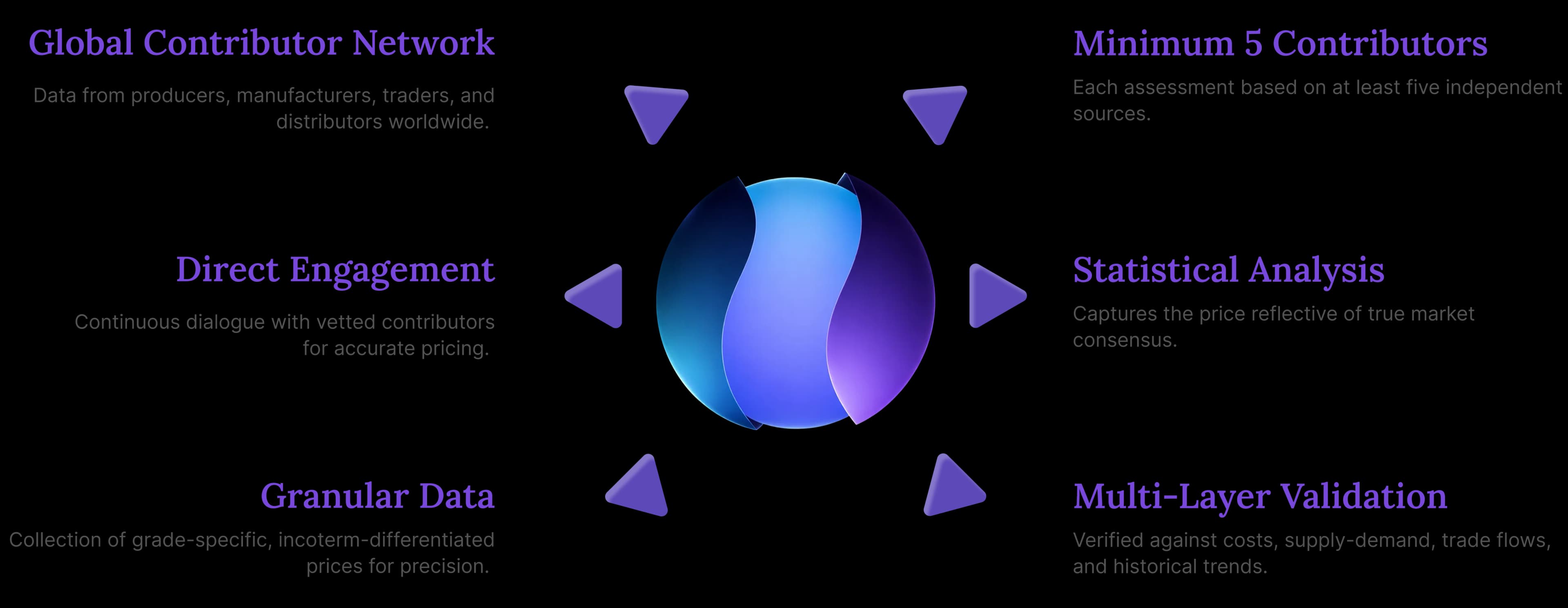
Our Price Analysis Methodology
Schedule A Demo
Experience how Procurement Resource transforms raw material price data into clear, decision ready intelligence. Optimise your performance with reliable, expert market data and analysis. Schedule your demo today to experience a live walk-through where our experts will showcase interactive price charts, forecasted prices, and insights driving the prices for your key commodities, tailored to your workflows. Contact us now!
Our Team will be happy to assist you
We are just a text away
Still Need Help ?
Other Related Reports
Allyl PEG Production via Polymer Capping
This report presents a detailed cost analysis of allyl PEG production from polyethylene glycol ether and allyl chloride using polymer capping process.
PAO Production from polymerization
This report provides the cost structure of PAO production by the polymerization process. The process involves the polymerization of alpha olefin to get polyalphaolefin.
Low-Density Polyethylene (LDPE) Production from Polymerization
This report provides the cost structure of LDPE by the polymerization process. In this process, ethylene is cooled, compressed, and converted into polyethylene in a reaction vessel at 320 degree centigrade.
LLDPE Production from Copolymerization
This report provides the cost structure of LLDPE by the copolymerization process. The process involves polymerization via two techniques: solution polymerization and gas-phase polymerization.
Subscription Plans
Unlock full access to Procurement Resource's price databases, interactive charts, and short-term forecasts for thousands of commodities. Elevate your sourcing decisions by comparing prices across regions, downloading historical data, and layering in analyst-backed insights, all with our flexible plans that scale as your portfolio grows.
Still have any Questions
Contact Us



Price Trend Dashboard - What's Included
Price trends across a diverse portfolio of categories amd products, spanning board to niche chemicas
Coverage extendable to grade-specific chemicals based on procurement requirements
Regular price tracking supported by robust historical datasets
News, policy updates, and key market drivers impacting price movements
Short-term and long-term price outlooks and forecasts
Supply–demand dynamics and capacity-driven market analysis
- Unlimited Users
- Historical Monthly Price
- USA, Europe, APAC Covered
- Monthly Forecast
- 12 Months validity
- News & Events
- 50 Products (Refer Next Page For List)
Related News
View All
Why Procurement Database

Assistance from Experts
Throughout 2024, the Asian acetoin market experienced fluctuating trends with regional variations. Q1 began with moderate price increases driven by supply constraints from Chang Chun Plastics' maintenance shutdown in Taiwan. Post-S...

Client's Satisfaction
Throughout 2024, the Asian acetoin market experienced fluctuating trends with regional variations. Q1 began with moderate price increases driven by supply constraints from Chang Chun Plastics' maintenance shutdown in Taiwan. Post-S...

Assured Collaboration
Throughout 2024, the Asian acetoin market experienced fluctuating trends with regional variations. Q1 began with moderate price increases driven by supply constraints from Chang Chun Plastics' maintenance shutdown in Taiwan. Post-S...
Global Insights
Throughout 2024, the Asian acetoin market experienced fluctuating trends with regional variations. Q1 began with moderate price increases driven by supply constraints from Chang Chun Plastics' maintenance shutdown in Taiwan. Post-S...