Glutaraldehyde Price Trend Analysis 2026: Market Insights, Supply Demand Analysis, Latest News, Price Drivers & Historical Prices
Glutaraldehyde Price Trend H2 2025
Asia
In Asia, glutaraldehyde prices rose moderately during the second half of 2025. The production of glutaraldehyde relies on acrolein, which in turn is made from glycerin and propylene. Both feedstocks faced tight supply and higher costs during H2’25. Glycerin prices surged due to limited palm oil availability, droughts, and export restrictions in Southeast Asia, while propylene supply grew but downstream polypropylene demand was weak, limiting propylene restocking. These factors reduced acrolein output, which constrained glutaraldehyde supply. At the same time, demand remained strong from water treatment, pharmaceuticals, and textile industries. As a result, manufacturers raised prices slightly to balance supply and demand fundamentals.
Europe
In Europe, glutaraldehyde prices increased steadily but were less volatile than in Asia. European producers depended on imported acrolein from Asia and locally produced propylene. Supply delays and higher feedstock costs supported price growth, while demand in disinfectants, leather processing, and industrial chemicals remained firm. Local refiners tried to optimize production and inventory to cope with import delays and cost pressures. Buyers were cautious, focusing on essential purchases, which moderated sharp price spikes but still resulted in a steady upward trend.
North America
In North America, glutaraldehyde prices showed moderate increases. Domestic production relied on propylene and glycerin-based acrolein imports from Asia, where supply remained tight. Rising feedstock costs and transportation delays contributed to higher production costs. End-users in water treatment, paper, and textile sectors maintained stable demand, but cautious purchasing during the off-season limited large restocking. Overall, the market experienced firm prices, with some short-term fluctuations depending on supply availability.
Analyst Insight
According to Procurement Resource, Glutaraldehyde prices are expected to remain firm in the coming months given the tight acrolein supply and steady industrial demand.
Related Report
Our Clients































Procurement Resource Database
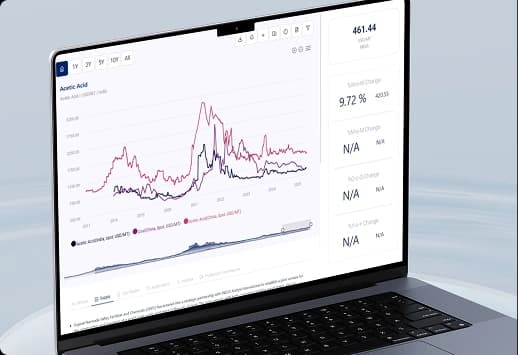
Turn price intelligence into action with the Procurement Resource Database. Log in or subscribe to unlock live price trends, historical charts, supplier databases, cost curves, and analyst-backed insights across chemicals, agriculture, energy, packaging, and more. Use these tools to benchmark your contracts, plan budgets with confidence, and stay ahead of market moves on every product you buy.
Glutaraldehyde Dashboard Inclusions

0
+Products
0
+Regions
0
+Subscriptions
Asia
In the first half of 2025, the Glutaraldehyde market in Asia experienced mixed price movement influenced by fluctuations in feedstock availability, demand from water treatment and leather sectors, and logistics. The year began with relatively firm prices as regional buyers built up inventories before the Lunar New Year holidays, especially in China and Southeast Asia.
However, by February and March, market activity declined sharply due to reduced manufacturing output and weak demand from downstream industries. Logistic issues such as port congestion in major Asian hubs also hampered smooth trade flow. Although manufacturing picked up slightly by late Q2, the overall demand from end-use sectors like textiles and tanning remained soft, keeping prices under pressure throughout much of the half-year.
Europe
In Europe, Glutaraldehyde prices showed a largely downward trend during H1’25, primarily due to subdued demand from key sectors and economic uncertainty. Tariff uncertainties and cautious buying behaviour limited transactions in the first quarter.
Despite supply-side constraints from occasional plant maintenance in Q2, weak consumer confidence and sluggish industrial demand, especially from leather processing and water disinfection sectors, outweighed supply concerns.
Crude oil volatility also impacted production costs but did not significantly support prices due to soft downstream requirements. Additionally, competition from imported materials—particularly from Asia—exerted further downward pressure on local pricing.
North America
The North American Glutaraldehyde market saw a gradual decline in prices over the first half of 2025. January started strong on the back of pre-season demand from water treatment and healthcare industries. However, the momentum slowed from March onward as economic slowdown and global trade tensions reduced buyer activity.
The downstream sectors showed muted growth, and high inventory levels across the supply chain further suppressed fresh buying. The ongoing weakness in propylene and crude oil markets also kept production costs low, making it difficult for manufacturers to sustain pricing.
Asia
The Asian Glutaraldehyde market, particularly in China, showed a downward trend during Q4'24. Chinese manufacturers focused on inventory clearance through year-end discounts, which put downward pressure on prices. The market saw steady demand from pharmaceutical and water treatment sectors, but abundant supply kept prices soft.
In India, the market remained more stable, supported by consistent demand from the healthcare sector and strategic purchasing by manufacturers. The slight variations in feedstock prices, which declined in the region, contributed to the overall pricing dynamics.
Europe
European Glutaraldehyde markets maintained relative stability throughout Q4'24. The region experienced steady demand from water treatment facilities and healthcare applications, while industrial cleaning sector requirements provided additional support. Manufacturers operated at normal rates, managing production to match market demand. Energy costs continued to impact production expenses, but stable feedstock prices helped maintain balanced market conditions. End-users followed regular procurement patterns, focusing on maintaining optimal inventory levels.
North America
The North American Glutaraldehyde market showed significant strength in Q4'24, particularly in December. Prices rose notably due to supply concerns and potential port disruptions related to ongoing labour negotiations. The uncertainty around port operations led to increased stockpiling by buyers. The healthcare and water treatment sectors maintained strong demand, while the oil and gas industry's requirements provided additional support to the market. Manufacturers operated at high rates to meet the increased demand from panic buying.
Asia
The prices for glutaraldehyde demonstrated a bullish trend in the Asian market during the discussed period. Despite stable production rates, the terminal demand remained strong across key industries. Moreover, high freight charges and logistical disruptions contributed to elevated costs, which suppliers successfully passed on to consumers owing to the positive market sentiment.
The prices registered continuous gains throughout the quarter as the downstream demand from healthcare and water treatment sectors turned aggressive, leading to active hoarding by the suppliers.
Europe
Glutaraldehyde prices in Europe kept upward throughout Q3 2024, primarily due to robust demand and tightening supply. The market saw increased buying interest, particularly from the medical sterilization and water treatment sectors. Despite high production rates providing some relief, sellers maintained firm prices amid strengthening supply-demand dynamics.
North America
The North American glutaraldehyde market experienced steady price increases in Q3’24. Initial price gains were observed due to strong demand and rising feedstock costs. However, prices stabilized slightly mid-quarter, influenced by improved production rates and steady downstream industry demand. As Q3 progressed, natural calamities and logistics challenges contributed to renewed price gains.
Asia
In the Asian market, glutaraldehyde prices followed an upward trajectory during Q2 2024. This increase was largely driven by higher production costs, notably due to the rising prices of hydrogen peroxide feedstock. The elevated shipping charges further contributed to the overall cost of production, exacerbating the price hike of glutaraldehyde. Additionally, the region faced significant logistical challenges, including congestion at major ports such as Shanghai, Ningbo, and Singapore.
These port congestions led to delays in shipments reaching their destinations, further escalating transportation costs and contributing to the price rise of glutaraldehyde. The disrupted shipping schedules and increased freight charges, particularly for shipments from East Asia to North America, compounded the supply strains, making it more expensive to transport glutaraldehyde.
Europe
In the European countries, more than the equilibrium of supply and demand, the global freight dynamics impacted the glutaraldehyde market during the second quarter of 2024. The ocean freight charges saw substantial increases, especially for shipments arriving from Asian countries, raising the concerns of the trading sector. This situation was further complicated by diversions in the Red Sea and capacity issues along East Asian shipping lanes.
The exporters also faced steep increases in freight rates for shipments from the North American West Coast to East Asia, adding to the overall cost pressures. These logistical challenges and increased transportation costs played a crucial role in shaping the price trends of glutaraldehyde in different European markets.
North America
In the US, glutaraldehyde prices experienced a noticeable decline during Q2 2024. This downward trend was primarily driven by weakened demand from key domestic sectors, including water treatment and laboratory disinfectants. The consumers in these sectors began opting for alternative disinfectants, which reduced the overall demand for glutaraldehyde. Despite this decline in demand, the supply of glutaraldehyde remained abundant, allowing traders to maintain satisfactory inventory levels.
Additionally, the cost of hydrogen peroxide, a critical feedstock for glutaraldehyde production, rose due to increased freight charges for ocean shipments. This rise in transportation costs led to higher overall production expenses, adding some upward pressure on prices. However, the ample supply and lower demand overshadowed these cost increases, resulting in a net decrease in glutaraldehyde prices.
Asia
The global glutaraldehyde market faced significant challenges characterized by a weakened purchasing environment and consistent downward price trends due to sluggish overseas demand and reduced bids from major manufacturing units, which were well reflected in the pricing patterns of the Asian glutaraldehyde price trend. This led to a decline in glutaraldehyde exports from significant production units and caused regional markets to trade sideways, resulting in losses.
The limited demand across various sectors, including medical sterilization, laboratories, leather tanning, and oil and gas industries, also contributed to the subdued market conditions. Additionally, exports from China to European regions declined, further impacting market off-takes. The contraction in feedstock also narrowed profit margins and sales among the manufacturing sectors. These factors collectively contributed to the challenging dynamics of the market faced by the glutaraldehyde price trend, with demand remaining limited and prices experiencing a downward trajectory.
Europe
The European glutaraldehyde market encountered challenges marked by slow demand recovery, limited trading activities, and oversupplies, resulting in a downward price trend. The traders, by the end of the first quarter, were forced to offer discounts on bulk purchases offered by suppliers, reflecting the subdued market conditions. The frail demand and oversupplies persisted, compounded by sliding movements in formaldehyde prices, further dampened the market progression.
These factors collectively hindered market growth, prompting a wait-and-see approach among the consumer sector and raising their skepticism. However, a short phase of recovery was seen towards the end of Q1 of 2024, driven by the rise in restocking activities in anticipation of a rebound in the sales figures of glutaraldehyde in subsequent quarters with the ease in inflationary pressure. However, challenges in the glutaraldehyde supply chain, particularly influenced by the poor supply of formaldehyde, further elevated the production costs, leading to higher import prices for the European market.
North America
In North America, the glutaraldehyde market saw a decline in prices attributed to reduced consumption, heightened inventory levels, and economic uncertainties. Despite a slight improvement in the purchasing activities of the consumers and their spending budgets, manufacturing output decreased due to a slowdown in the service sector. Additionally, high freight charges and longer delivery times further dampened demand.
The manufacturers thus adopted a cautious approach, scaling back purchasing activities and utilizing existing inventories. International trading activities also decreased due to disruptions in ocean routes. Compounded by the economic uncertainties, manufacturers exercised caution in purchasing decisions, focusing on cost management and efficiency. However, there was a slight moment of relief for the market towards the conclusion of the quarter as the approach of the downstream industries started to favor the rise in the glutaraldehyde price trend.
| Product | Category | Region | Price | Last Updated Month |
| Glutaraldehyde | Healthcare | USA | USD 2000/MT | Dec'2023 |
Stay updated with the latest Glutaraldehyde prices, historical data, and tailored regional analysis
Asia
The Asian glutaraldehyde prices found it difficult to sustain their momentum towards the end of the fourth quarter as the region suffered from a lack of demand from the downstream industries. Among the end-user sector, the pharmaceutical and leather tanning field showed a significant depreciation in its rates of procurement. This imbalance in demand was further supported by the decline in the cost of crude oil and other traditional fuels, which in turn lowered the cost of production. Further, the number of shipment offtakes from the Chinese ports to European countries also took a southwards turn as the sea routes were blocked amid the Isarael-Hamas crisis.
Europe
In European countries, the situation of the glutaraldehyde market was not different than was observed in the Asia-Pacific region. The region witnessed a noticeable decline in trading activities as the number of bulk purchases remained stagnant even after the allotment of heavy discounts by the traders. The scenario of downstream industries was also unpredictable throughout the quarter, which was well translated in the trajectory of glutaraldehyde price trend.
North America
The surplus influx of inventories in the US worried the traders as the recovery in demand dynamics was slow. There were only a very few instances when the traders encountered a bulk purchase; otherwise, the market showed an overall muted outlook. In North America, the fall in the cost of feedstock formaldehyde and a significant fall in the cost of crude oil was an additional cause of tension for the manufacturers as it reduced the production prices and accelerated the downward movement of glutaraldehyde prices.
Asia
In Asia, glutaraldehyde price trend kept recording degrading numbers throughout the given quarter of the year 2023. Since the disinfectant business really took off during the peak pandemic times, suppliers were confident with the consistent demands. So, the bulk supplies exhausted the inventory spaces. However, as the world, especially China, slowly came out of the most difficult pandemic phase, the glutaraldehyde demands fell in a persistent manner.
Other than this the toxicity and physical cautions associated with working with glutaraldehyde also made consumer industries levitate towards other alternatives. The feedstock materials acrolein and methyl vinyl ether were also not able to provide any substantial cost support. Overall, the glutaraldehyde price curve kept on tilting downwards throughout the said period.
Europe
In the European chemical industry, the glutaraldehyde market faced persistent hurdles as the demands spectrum didn’t rise during the entire period of discussion. Lackluster offtakes put immense pressure on suppliers since the inventories were also overflowing. There were various reasons causing this glutaraldehyde market downturn in Europe.
First, the European chemical industry relies a lot on cheap Asian exports, and other than this, the long-stretched period of mounting inflation owing to the Russian war shook the industrial operational foundation as many plants went into supply cutdowns to prevent further losses. Overall, dull market sentiments were observed.
North America
The US domestic market mimicked the global trend for glutaraldehyde prices. The market, too, saw a regular dip in the price graph as feeble demands and lowered upstream cost pressure kept the glutaraldehyde bearish here as well.
Asia
The first quarter of 2023 presented several challenges for the glutaraldehyde market as the gap between supply and demand widened with strong supply chains and weak demand dynamics.
In addition to this, the plunging economy and reduction in the number of inquiries from overseas industries resulted in the poor performance of the glutaraldehyde price trend. However, the second quarter was backed by high demand, short supplies, and depleting levels of inventories, but the rising levels of inflation and slowing down of the economy proved to be a challenge for the glutaraldehyde price trend.
Europe
The high pressure of inflation and weak economic conditions due to the ongoing Russia-Ukraine crises resulted in the decline in the prices of glutaraldehyde in the first quarter of 2023. In addition to this, low demand and the fall in the cost of raw materials also proved to be a challenge for the glutaraldehyde price trend.
The fall in the price trend of glutaraldehyde was much more significant in the second quarter as the market conditions became much more unstable during this time. The consumers purchasing capacity declined, and due to this, the level of inventories surged, impacting the price trend of glutaraldehyde negatively.
North America
The North American region struggled with the failure of two major banks that caused the level of inflation to rise exponentially, and with the slowing of economic activities, the appetite of consumers also declined significantly. In the initial month of the second quarter, the price showed slight improvement with positive market activities in healthcare, water treatment, and other related industries. But soon, the procurement from domestic and international markets fell, and with that, the price trend of glutaraldehyde.
About Glutaraldehyde
Glutaraldehyde is a colorless oily pungent smelling liquid that is widely employed as a disinfectant, sterilizer, and fixative in various industrial processes. The main industries that employ glutaraldehyde are textile, healthcare, water-treatment, research, and leather manufacturing. Its disinfectant properties come from its ability to kill bacteria, viruses, fungi, and other microorganisms. However, it should be handled with care due to its toxicity and potential for irritation, and its use is subject to safety regulations and precautions.
Glutaraldehyde Product Detail
C5H8O2
Disinfectants and sterilization, Tanning agent, Oil and gas industry, Water treatment, Biomedical research, Adhesives
UPICHEM, Grassland Agro, Whiteley Corporation, Dow, Finoric LLC, Lenntech B.V., Hubei Jinghong Chemical Co.
Regional Coverage
Asia Pacific
Europe
North America
Latin America
Africa
CurrencyUS$ (Data can also be provided in local currency)
Supplier Database AvailabilityYes
Customization ScopeThe report can be customized as per the requirements of the customer
Post-Sale Analyst Support360-degree analyst support after report delivery
Note: Our supplier search experts can assist your procurement teams in compiling and validating a list of suppliers indicating they have products, services, and capabilities that meet your company's needs.
Glutaraldehyde Production Processes
In this process, the reaction between acrolein and methyl vinyl ether gives a pyran I.e., 3,4-dihydro-2-methoxy-2H-pyran. This pyran on hydrolysis gives glutaraldehyde and alkanol and after water extraction in multistage process, the final product is obtained.
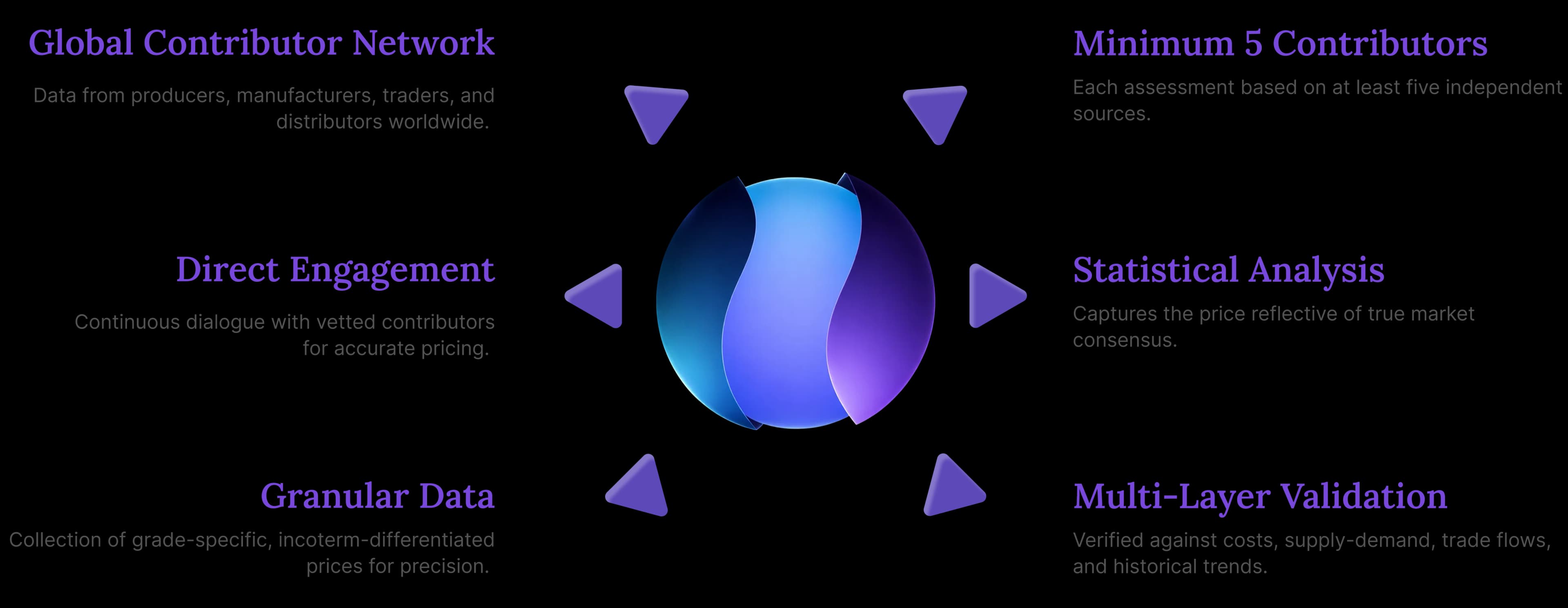
Our Price Analysis Methodology

Schedule A Demo
Experience how Procurement Resource transforms raw material price data into clear, decision ready intelligence. Optimise your performance with reliable, expert market data and analysis. Schedule your demo today to experience a live walk-through where our experts will showcase interactive price charts, forecasted prices, and insights driving the prices for your key commodities, tailored to your workflows. Contact us now!
Our Team will be happy to assist you
We are just a text away
Still Need Help ?
Subscription Plans
Unlock full access to Procurement Resource's price databases, interactive charts, and short-term forecasts for thousands of commodities. Elevate your sourcing decisions by comparing prices across regions, downloading historical data, and layering in analyst-backed insights, all with our flexible plans that scale as your portfolio grows.
Still have any Questions
Contact Us



Price Trend Dashboard - What's Included
Price trends across a diverse portfolio of categories amd products, spanning board to niche chemicas
Coverage extendable to grade-specific chemicals based on procurement requirements
Regular price tracking supported by robust historical datasets
News, policy updates, and key market drivers impacting price movements
Short-term and long-term price outlooks and forecasts
Supply–demand dynamics and capacity-driven market analysis
- Unlimited Users
- Historical Monthly Price
- USA, Europe, APAC Covered
- Monthly Forecast
- 12 Months validity
- News & Events
- 50 Products (Refer Next Page For List)
Why Procurement Database

Assistance from Experts
Throughout 2024, the Asian acetoin market experienced fluctuating trends with regional variations. Q1 began with moderate price increases driven by supply constraints from Chang Chun Plastics' maintenance shutdown in Taiwan. Post-S...

Client's Satisfaction
Throughout 2024, the Asian acetoin market experienced fluctuating trends with regional variations. Q1 began with moderate price increases driven by supply constraints from Chang Chun Plastics' maintenance shutdown in Taiwan. Post-S...

Assured Collaboration
Throughout 2024, the Asian acetoin market experienced fluctuating trends with regional variations. Q1 began with moderate price increases driven by supply constraints from Chang Chun Plastics' maintenance shutdown in Taiwan. Post-S...
Global Insights
Throughout 2024, the Asian acetoin market experienced fluctuating trends with regional variations. Q1 began with moderate price increases driven by supply constraints from Chang Chun Plastics' maintenance shutdown in Taiwan. Post-S...