Wheat Price Trend Analysis 2026: Historical Prices, Supply Demand Analysis, Price Drivers, Latest News & Market Insights
Wheat Price Trend Q1 2026
| Product | Region | Incoterm Basis | Price | Last Updated Month |
| Wheat | China | FOB | USD 418/MT | April 2026 |
| Wheat | India | FOB | USD 271/MT | April 2026 |
| Wheat | USA | FOB | USD 209/MT | April 2026 |
| Wheat | France | FOB | USD 236/MT | April 2026 |
| Wheat | Argentina | CIF | USD 274/MT | April 2026 |
| Wheat | China | FOB | USD 414.93/MT | March 2026 |
| Wheat | India | FOB | USD 253.24/MT | March 2026 |
| Wheat | USA | FOB | USD 202.80/MT | March 2026 |
| Wheat | France | FOB | USD 234.91/MT | March 2026 |
| Wheat | Argentina | CIF | USD 262.44/MT | March 2026 |
Stay updated with the latest wheat prices, historical data, and tailored regional analysis
- Global wheat prices followed a moderately firm trend during Q1 2026, supported by tightening supply expectations and weather-related risks across key producing regions.
- Elevated energy and fertilizer costs increased production expenses and influenced planting decisions, contributing to upward price pressure.
- Downstream demand remained stable, with pricing primarily driven by supply-side developments and trade flow adjustments.
Asia
In Asia, particularly India, the wheat outlook remained steady/soft in Q1 2026 due to ample domestic supplies and supportive policy measures. Stock-related pressures eased as inventories increased, indicating favourable supply conditions during the quarter and helping to relieve price pressures. According to the Food and Agriculture Organization (FAO), global wheat prices moved higher, rising by 4.3 percent in March, driven by tightening global supply conditions; however, this increase did not translate to the Asian market due to sufficient domestic availability. At the same time, weather-related risks, including hotter-than-normal conditions, remained elevated, keeping prices largely confined within a narrow trading range.
Europe
In Europe, wheat prices recorded a trend that was stable to firm, on the back of weather and export factors. The FAO noted that wheat prices were up 1.8% in February, owing to the risks of frost and winterkill for some regions in Europe. Nevertheless, positive crop performance in other areas, together with competitive export activities in the region, kept price gains in check amid logistical issues in the Black Sea export route.
North America
In North America, wheat prices trended firmly higher, thanks to adverse weather and tight supplies. In its report, FAO indicated that poor crop conditions in the US, as a result of the prevailing drought, had been supportive of the rise in global prices seen in March. Furthermore, drought conditions prevailed in almost 60% of US farmlands, which affected wheat output, hence the price support. Higher input costs and geopolitical tensions also contributed to higher grain prices, with US wheat among the grains benefiting from geopolitical turmoil in Iran.
Analyst Insight
According to Procurement Resource, in the near term, wheat prices are expected to remain slightly firm, supported by weather uncertainties and elevated input costs, though a comfortable global supply may limit sharp increases.
Related Report
Our Clients































Procurement Resource Database
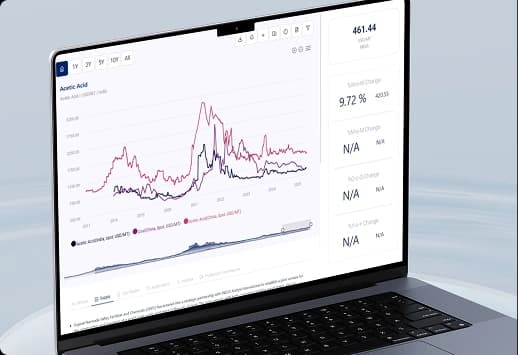
Turn price intelligence into action with the Procurement Resource Database. Log in or subscribe to unlock live price trends, historical charts, supplier databases, cost curves, and analyst-backed insights across chemicals, agriculture, energy, packaging, and more. Use these tools to benchmark your contracts, plan budgets with confidence, and stay ahead of market moves on every product you buy.
Wheat Dashboard Inclusions

0
+Products
0
+Regions
0
+Subscriptions
Asia
In Asia, wheat prices in H2 2025 remained largely stable to slightly firm, supported by controlled domestic supply and policy-driven trade restrictions. In India, strong government procurement and export curbs kept surplus volumes within the domestic market, stabilizing mandi-level pricing despite ample inventories. Seasonal factors such as festival-driven miller demand and thinner arrivals supported intermittent firmness, while elevated diesel and fertilizer costs encouraged farmers to withhold stocks, tightening spot availability. However, overall demand remained steady rather than aggressive, with government welfare distribution and routine consumption absorbing supply. Efficient rail logistics and comfortable warehouse stocks prevented sharp volatility, keeping the market balanced with mild upward support toward year-end.
Europe
Europe’s wheat market in H2 2025 remained under pressure due to ample harvest output and elevated carryover stocks, particularly in Russia, which weighed on export sentiment. Strong production and improved port throughput ensured steady shipments, while subsidized input costs such as diesel and fertilizer enhanced exporter competitiveness. However, global demand remained cautious, with key buyers like Turkey and Egypt diversifying sourcing amid competitive offers from other origins, limiting export traction. Inventory overhang and muted purchasing activity reduced urgency among sellers, keeping prices subdued. While seasonal restocking and tender activity provided some support toward year-end, the overall market tone remained soft due to abundant supply and competitive global trade dynamics.
North America
In North America, wheat prices in H2 2025 showed mixed dynamics, with early support from export demand and harvest delays giving way to softer conditions later in the year. Improved harvest progress and rising post-harvest inventories increased supply availability, reducing urgency in spot markets. Although export demand strengthened mid-period due to inquiries from Asia and North Africa, competition from Black Sea origins limited sustained upside. Stable fertilizer and diesel costs influenced farmer selling patterns, while smooth logistics and efficient rail movement ensured uninterrupted supply flows. Toward year-end, ample stocks and muted overseas demand pressured export offers, leading to a more balanced-to-soft market environment.
Asia
In Asia, wheat prices showed a softening trend toward the end of Q2 2025, particularly in India, where post-harvest dynamics and policy measures shaped market direction. Following harvest completion, procurement slowed as ample government-held buffer stocks ensured sufficient domestic availability, reducing urgency among private buyers. The continuation of export restrictions, formally maintained through policy notifications, further limited international offtake and removed external price support. Demand weakened as buyers avoided bulk purchases amid adequate supply visibility and subdued speculative activity. Stable production costs post-harvest and normalized procurement conditions also contributed to easing price momentum, keeping the market balanced with a slight downward bias.
Europe
Europe’s wheat market experienced notable pressure during Q2 2025, driven by improving harvest expectations in Russia and intensifying export competition across the Black Sea and EU regions. Strong crop outlooks and rising domestic availability in Russia reduced export urgency, while declining livestock feed consumption further dampened internal demand. Export volumes remained weak amid reduced competitiveness against European-origin wheat, with key importers diversifying sourcing strategies. Additionally, inventory accumulation and subdued trade flows weighed on sentiment. However, toward the transition into July, tightening freight availability and renewed buying interest from North Africa and the Middle East provided limited support, indicating a temporary stabilization following a bearish June.
North America
In North America, wheat prices reversed gains toward the end of Q2 2025 as improved weather conditions across major growing regions enhanced yield expectations and alleviated earlier supply concerns. Better crop prospects in key Midwest states increased supply visibility, prompting a shift in market sentiment. Export demand softened, with reduced foreign bookings and slower inquiries from major importing regions contributing to weaker procurement activity. At the same time, stabilization in fertilizer and fuel costs eased production pressures, while improved post-harvest logistics enhanced supply chain efficiency. Despite steady domestic demand, the combined effect of stronger supply outlook and weaker exports led to a softer market trajectory.
Asia
In Asia, wheat markets were marked by high volatility over the quarter. January began with a strong price rally due to tight supplies and strong domestic demand, especially from food manufacturers. Despite official efforts to control stockpiling, prices remained firm. February brought a brief pullback as a rise in cultivation and measures to secure local availability helped stabilize the market.
However, prices rebounded in March, driven by large-scale public procurement which restricted private sector access. Farmers were incentivized to sell into government channels, further limiting open-market supplies. Weather uncertainties added to market nerves, and by the end of March, prices remained firm amid robust consumption and tightening availability.
Europe
European wheat markets remained tense throughout the first quarter. In January, wheat prices rose sharply due to reduced exports from a major supplier facing poor weather and policy-related constraints. This caused European importers to turn to alternative sources, which increased demand across the region. February saw continued price strength as the export limitations persisted, keeping the market tight.
In March, the situation intensified, with export volumes dropping further and fewer suppliers operating. Even as global markets saw some relief, domestic logistical issues and inflation kept European wheat prices elevated. The region closed the quarter with strong market sentiment and cautious buying patterns.
North America
Wheat prices in North America experienced noticeable shifts throughout the first quarter of 2025. The year began with softer prices, as demand from overseas buyers was low and competition from other global suppliers remained strong. A firm local currency and unpredictable freight costs further limited export interest.
In February, prices saw a brief rise driven by concerns over tight global supplies and reduced domestic production in some areas. Government-backed grain procurement added to the buying pressure, which helped lift prices temporarily. However, the momentum didn't last. By March, favorable weather improved crop prospects, easing previous supply concerns. Trade uncertainties and limited buying from major importers also contributed to weaker prices by the end of the quarter.
Asia
In the final quarter of 2024, wheat prices across Asia surged to record levels, largely due to strong demand and tightening supply. India experienced a sharp price rally as government-held stocks remained limited and were not released in time to cool the market. Traders and millers struggled to access affordable wheat, leading to further market tension.
The delayed release of state reserves added fuel to already rising prices. Meanwhile, weather-related challenges, such as dry conditions, threatened the outlook for the next crop, intensifying concerns among bulk buyers and stockists. In Turkey, the temporary import ban remained in place, which also added pressure on local prices, despite rising concerns about domestic wheat quality. Across the region, buyers increasingly turned to Russian wheat, but disruptions in Russian exports due to drought further limited access.
Europe
Wheat prices in Europe, especially in Eastern regions like Romania and Bulgaria, followed an upward trend throughout Q4. Reduced Russian exports created an opening for European suppliers to step in, though they initially faced pricing disadvantages. As Russia struggled with drought and internal supply control measures, European traders saw improved chances for exports. However, market activity remained somewhat muted, with farmers hesitant to sell and buyers cautious about elevated costs.
In Western Europe, particularly in France, crop damage from earlier rain events meant lower availability for export, which also limited competition in traditional North African markets. UK feed wheat prices, on the other hand, continued a longer-term decline due to global oversupply and weak demand despite the ongoing challenges in Russia.
North America
In the United States, wheat prices showed a modest recovery early in Q4, driven by global demand and fund short-covering. However, this was followed by a pullback as improved rainfall in the southern Plains boosted winter wheat crop prospects. While the U.S. did not face the same severe supply issues as Russia or India, a strong U.S. dollar kept American wheat less competitive in global markets, limiting further price gains. Technical selling and favorable domestic weather conditions helped stabilize prices by the end of the quarter.
Asia
The price trajectory of wheat in the third quarter of 2024 showed a stable trend with slight fluctuations. Wheat prices were seen wavering at the lower end of the curve for the majority of the first half of Q3’24, however, as the global supply saw declines, prices started up ticking in the Chinese market too in the latter half. However, the domestic supply and demand dynamics were more balanced in China compared to the global wheat markets. However, in this quarter, China took measures to stabilize prices, including limiting wheat imports from the United States, France, Australia, and Canada. These actions, combined with higher domestic output and stable flour consumption, helped prevent further price declines. Additionally, in September, the Chinese government announced plans to purchase 37 million metric tons of wheat at a minimum price in the coming year to support domestic production, should prices fall below a certain threshold.
In contrast, wheat prices in the Indian market remained elevated in September as the country prepared for the festival season. Recent curbs on wheat stock limits for traders and millers were insufficient to control rising prices. Downstream flour mills urged the government to release stocks to stabilize prices and maintain supply in the market.
Europe
The price of wheat fluctuated in the European market during the said quarter. Expectations of significantly lower yields, coupled with declining inventories, contributed to this volatility. Bad weather and a severe dry season were the primary causes of the yield decline. France, the leading producer, expectedly experienced its lowest yield this year. As a result, wheat prices showed an upward trend in the final month of the quarter.
North America
The U.S. wheat market showed a fluctuating trend in the third quarter of 2024. Prices remained within a narrow range during the first two months of the quarter, as the market adopted a wait-and-see attitude in anticipation of the approaching harvest season. However, at the end of August, prices began to rise due to harvest declines in the Black Sea regions and the European Union. This supply shortage increased demand for U.S. wheat, both domestically and globally, leading to a higher price range. Additionally, bad weather conditions related to the hurricane season posed logistical challenges and disrupted production, though this had a limited impact on prices.
| Product | Category | Region | Price | Last Updated Month |
| Wheat | Agriculture, Farming and Commodity | China | 371 USD/MT | April '24 |
| Wheat | Agriculture, Farming and Commodity | China | 343 USD/MT | June '24 |
Stay Updated with the Latest Wheat Prices, Historical Data, and Tailored Regional Analysis
Asia
In the Asian markets, wheat prices were found to be falling throughout the given span. Riddled with oversupply, China started cancelling its import orders to balance the wheat prices. The monthly average prices in the Chinese market went from about 371 USD/MT in April '24 to around 343 USD/MT in June '24. This led to an approximate 7% depreciation in the country's wheat prices. In the Indian wheat market, however, the situation was a little different. By May '24, the wheat stocks in India's government warehouses had fallen to their lowest since 2008, down about 10% year-on-year to 26 million metric tons, compared to 29 million metric tons in May 2023.
This decline, followed by two years of reduced crop yields due to higher temperatures, has caused serious supply concerns for the most populous nation. To amend this situation, India plans to resume wheat imports by reducing duties, imposing import limits, and making open market sales to manage prices and boost supplies.
The country, the second-largest wheat producer, has had a 44% import duty in place for six years, effectively halting imports. If the duty is lowered, imports could start via major south Indian ports from July 1, 2024. Despite an estimated wheat production of 112.9 million tonnes for 2024-25, the government fell short of its procurement target, reaching only 26.6 million tonnes. Importing wheat could help stabilize prices and ensure food security.
Europe
Wheat prices have been downward facing in the European markets. A decline in fertilizer prices and favorable weather conditions, especially in Argentina, have supported strong yields in the last marketing year. Additionally, Ukrainian and Russian wheat exports have recovered, with Russia's exports reaching record levels.
Despite the end of the Black Sea Grain deal, Ukraine has maintained steady wheat exports. With prices near a floor, many buyers have delayed purchases, waiting for the market to bottom out, which should support a price recovery. The USDA also forecasts the lowest stock levels in eight years by the end of 2023/24, further supporting potential price increases.
North America
Wheat prices have been following the global tepid trend in the American markets as well. There are several factors contributing to the continued fall in prices over the said duration. U.S. wheat farmers face growing financial challenges as global wheat prices remain near four-year lows due to abundant supply while production costs for equipment and transportation stay high.
Despite potentially having their best crop in years, many farmers, particularly in the Great Plains, are struggling to break even. Increased wheat exports from the Black Sea and Europe have replenished global stocks, lowering U.S. wheat prices. Additionally, large corn harvests globally are pressuring grain prices.
| Product | Category | Region | Price | Last Updated Month |
| Wheat | Agriculture, Farming and Commodity | USA | 345 USD/MT | March 2024 |
| Wheat | Agriculture, Farming and Commodity | Europe | 315 USD/MT | March 2024 |
Stay Updated with the Latest Wheat Prices, Historical Data, and Tailored Regional Analysis
Asia
The Asian wheat market was largely found to be stable during the said time. In the Indian market, several factors were driving these market trends during this period. India’s wheat stocks have reached a seven-year low, standing at approx. Nine million metric tons in government warehouses, the lowest since 2007/08. This decline is because of two consecutive years of low crop production majorly attributed to the disrupted and unseasonal weather changes in the region.
Despite the tight supply, the government has resisted calls to encourage imports by reducing the tax or directly purchasing from top suppliers like Russia because the election polls are due in the country in April – May months, and any decision on cutting tariffs seems unlikely before the election to avoid potential repercussions on global prices.
Shipping challenges through the Red Sea will also pose a threat if the country chooses to import from Russia or Ukraine. The international prices will also be impacted if India decides to become a wheat importer again. Witnessing a stable trajectory in the Chinese market as well, the prices wavered at around 386 USD/MT throughout the given period.
Europe
The wheat prices in the European market exuded stability like the global market. Prices didn’t undergo many fluctuations here as well. However, the European Commission forecast that the European Union's main wheat crop will fall to a four-year low in 2024/25 due to a drop in the planted area created tensions in the market.
This represents a nearly 4% decrease from the current season and marks the lowest level since 2020/21. Since the grain stockpiles in the Indian inventories are also at a record low, the suppliers are watching the events very closely. Not much changed for the concerned period, however, these events will potentially affect the grain security for the coming months.
North America
The market trends were observed to be mirroring the steadiness in the global wheat market in the U.S. market as well. Continued exports from Russia and Ukraine till the last year, despite the ongoing war facilitated by the Black Sea Deal, maintained the supply levels in the global markets to a great extent. However, declining wheat prices pose challenges for U.S. farmers, as falling output prices outpace input prices, leading to tighter profit margins. Among major wheat exporters, the stocks-to-use ratio is expected to be at a three-year low in 2023-24, which is another cause of concern.
| Product | Category | Region | Price | Last Updated Month |
| Wheat | Agriculture, Farming and Commodity | China | 415 USD/MT | October’23 |
| Wheat | Agriculture, Farming and Commodity | China | 410 USD/MT | December’23 |
Stay Updated with the Latest Wheat Prices, Historical Data, and Tailored Regional Analysis
Asia
The Asian market trend for wheat fluctuated within a very limited range during the last quarter of the year 2023. In the Chinese wheat market, the prices were observed to be depreciating consistently. The monthly average spot prices in the Chinese market went from about 415 USD/MT in October’23 to around 410 USD/MT in December’23. India reported lesser wheat production this year, which shot up the prices; hence, in order to control that, the Government of India slashed the storage capacity.
This brought the Indian wheat storage at around 19MT, a record seven-year low number. However, it helped the country cut down the selling prices by 15% within December and helped the government ensure that there was no artificial scarcity of the staple grain in the country.
Europe
The European wheat prices fluctuated at the lower level of the curve during the given period of Q4’23. The region saw a rise in export volumes of the discussed span. After the expiration of the Black Sea Deal, the Ukrainian shores witnessed the biggest export numbers in December’23. The Russian exports also rose simultaneously. Overall, low swinging price trend were witnessed in the European regional markets.
North America
The American wheat prices followed its European counterpart during the last quarter of the year 2023. The wheat production was estimated to be up by about 10%, adding to the supplies; however, at the same time, the export volumes declined by about 7%. This difference in supply and demand statistics created a supply glut for the domestic inventories and as a result, the prices crashed for wheat during the last three months of 2023.
| Product | Category | Region | Price | Last Updated Month |
| Wheat | Agriculture, Farming and Commodity | China | 388 USD/MT | July’23 |
| Wheat | Agriculture, Farming and Commodity | China | 414 USD/MT | September’23 |
Stay Updated with the Latest Wheat Prices, Historical Data, and Tailored Regional Analysis
Asia
In Asian countries, the wheat price trend shrank during the first phase of the quarter as consumers were cautious in placing orders in bulk. Several challenges, such as disruptions in the weather activities and disturbances in the transportation routes, had an adverse effect on the business activities of Asian countries.
The only thing that balanced the wheat market conditions was the stable demand from the downstream food sector. To tackle soaring inflation in the food sector, the government initiated the Russian routes of import, and its positive influence was seen in the wheat price trend during the latter half of this quarter; the prices grew from around 388 USD/MT in July’23 to 414 USD/MT (Spot, FD) in September’23 in China.
Europe
The European countries were significantly impacted by the withdrawal of Russia’s products from the region. The situation worsened when this constricted product availability slowed the movement of the downstream industries. Additionally, the toppling of the European currency made the imports much more costlier contributing a good share in pushing the wheat price trend in an inclining trajectory. Further, the downstream demand for wheat also supported the rise in wheat prices, but this momentum soon died down, especially in the later phase of the quarter, and so did the wheat price trend.
North America
The southwards trajectory of wheat price trend in North America was driven by high harvest rates and excess of supply amid muted yet stable demand. The traders looked for ways to lower this excess supply, but the downstream sectors were hesitant in placing their orders as the quality of wheat due to unfavorable weather conditions made them skeptical. The soaring inflation also had a negative influence on the movement of wheat price trend; further, with the consistent fall in export orders, the wheat price graph moved with unaided tangent.
Asia
The Chinese wheat market experienced a fall of about 15% as the average spot prices fell from around 458 USD/MT in January’23 to around 389 USD/MT in June’23. This price pattern is majorly attributed to the normalization efforts in global trade dynamics. Easing freight and energy situations substantially cut down the upstream costs.
The availability of Black Sea grains in the international market because of the UN-curated deal also compensated for the yield lost in the climatic mishaps. The post-COVID market recovery in China has been slow, but the food sector has rather paced since food is a preferred necessity. Thus, a healthy demand dynamic boosted the wheat market fundamentals.
Europe
The European wheat market experienced fluctuations throughout the said period. After having a firm start at the beginning because of the high inflationary pressure, the price trend changed momentum by the end of the first quarter as the Ukrainian shipments started arriving. The improvement in upstream situations also supported the downward trend. These patterns continued well in the second quarter as the general market sentiment was observed to be muted.
South America
Following the European wheat price trend, the South American wheat market also witnessed a short-ranged depreciation throughout the discussed period. With around 12% depreciation, the Wheat spot prices fell from about 327 USD/MT in January’23 to around 285 USD/MT in June’23. Overall, dull market trend were observed.
Asia
Asian wheat prices fluctuated throughout the said period. After reaching a record high, the wheat prices wavered within a narrow range in the third and fourth quarters. The primary influence on the Wheat market was restricted supplies.
The war between Russia and Ukraine was the biggest factor affecting the wheat supplies alongside the adverse and unseasonal weather changes, which hindered the crop cycle and were detrimental to wheat yield. Indian wheat market is known to fulfill a big part of global grain requirements. However, by Q3, the Government of India restricted wheat exports to sustain normalcy in the domestic market.
Europe
The European wheat market experienced a downward wavering price trend in the second half of the year 2022. Even amidst the war, Ukrainian wheat harvests had very good numbers, and initially, the supplies were only being consumed domestically, but the black sea agreement in July’22 opened the doors for offshore trading. These steps further promoted the wheat trade fundamentals. So, the prices fluctuated in a moderate range.
North America
In the North American wheat market, the adverse weather conditions anchored the price trend. The curtailed supplies were not able to fulfill domestic demands, and the price trend inclined for the majority of the discussed period.
Asia
The General Administration of Customs reported that China's imports of wheat fell to 700,000 tonnes in April 2022, a 22.4 percent year-over-year decline. According to information from the National Food and Strategic Reserves Administration, China increased the national minimum purchase price of wheat to 115 RMB/50 kg, an increase of 2 RMB over the previous year.
When India, which had greatly expanded shipments in Q2 2022, helping to make up for lost exports from Ukraine, imposed an embargo on wheat exports in May, prices soared even further in the global market.
Europe
Due to the Indian government’s statements about curbs on grain exports, wheat prices in Europe reached another historical high in Q2 2022. At the launch of Euronext, the price per tonne increased to 435 EUR, breaking the previous high of 422 EUR set at an auction in May 2022.
North America
In Q2 2022, wheat prices remained below recent highs despite a global scarcity that was made worse by the conflict between Ukraine and Russia and the drought in western America. The necessity for careful price and risk management was heightened by the large increase in input costs.The USDA's prediected high season's average farm price of 10.75 USD/bushel.
Latin America
The pace of wheat trades in Brazil picked substantially in the first week of May, but the second week saw a decline in activity as a result of the government's announcement of the upcoming auctions. On April 14, prices paid to producers in Brazil reached a maximum of 25.80 BRL, or 12.98 USD/60 kg bag. The Brazilian government has set a minimum price of 26.30 BRL, or 13.23 USD/bag.
Asia
In March 2022, domestic wheat prices increased. It was at an all-time high and varied a little. The average price on March 1 was 2920 RMB/MT, and on March 31, it was 3194 RMB/MT, a 9.38% rise over the previous month. Domestic trade entities were positive, hesitant to sell and hold up prices in the future as a result of the high spike in international wheat prices owing to the Russia-Ukraine war.
In addition, the domestic wheat market had fewer high-quality and circulating grain sources following March. Flour makers raised the purchase price of wheat several times to ensure output, and the manufacturers increased the price and replenished the warehouse numerous times.
However, Indian merchants agreed to export half a million tonnes of wheat in early March, and dealers are anticipated to sign more contracts to take advantage of record-high global prices, boosting shipments from the world's number 2 wheat producer. Fears of supply disruptions from the Black Sea region, which accounts for 30% of world wheat exports, have risen as a result of Russia's invasion of Ukraine.
Europe
As Russia invaded Ukraine in March, wheat prices blew its previous record high in European trading, casting doubt on the future of exports from two of the world's largest suppliers of the essential commodity. Wheat hit a new high of 344 EUR/MT (384 USD), eclipsing the previous high of 313.5 EUR set late last year.
Agricultural commodities are typically less volatile than equities or oil, but they have recently experienced remarkable surges and declines as a result of Russia's impending invasion of Ukraine. With Russia as the world's leading exporter and Ukraine as the fourth, the stakes are especially high for wheat.
North America
Wheat prices have risen as a result of Russia's invasion on Ukraine, compounding already high food prices. Prices were already high prior to this event, owing to relatively constrained supplies in key exporting countries. They are rising even faster as the war raises serious doubts about Russia's and Ukraine's ability to continue exporting. Importers are anticipated to restrict demand by deferring at least some purchases due to historically high and fluctuating global wheat prices.
It's also likely that some importers will turn to US wheat if other exporters are unable to meet demand. However, given the current huge price premium for US wheat over other main competitors, a big shift to US wheat is unlikely in the near term. Due to these factors, US exports have been reduced by 10 million bushels to 800 million bushels this month, the lowest level since 2015/16.
Asia
Indian wheat prices rose to 305 USD/MT on FOB basis in October, up from 260 USD/MT three months ago, thanks to a jump in exports. Since the introduction of COVID, freight costs have skyrocketed, making it hard for exporters to meet their demands. Sea freight costs have increased, yet the number of vessels available has reduced, resulting in erratic cargo schedules.
Despite the increasing market demand for agricultural produce, logistics delays continued to be a problem.
Europe
The price in Ukraine had soared to 320 EUR/MT in late 2021. Weather conditions were favourable in most parts of Europe, allowing winter grain crops to get a head start. According to Cocereal, the European grain trade organization, the total wheat production in EU stood at 128.9 MMT in 2021.
North America
The market price in the US was recorded at 285 USD/MT in the final quarter. The availability of goods in the United States was also reflected in the quotes. On the back of chronic drought and a bleak harvest outlook, Canadian quotations had risen to over 40 USD/MT.
Latin America
The price in Brazil was 290 USD/MT in the fourth quarter. The price in Argentina remained robust, reaching a high of 0.25 USD/kg in November 2021. Between December and March, Brazil sold nearly 2.5 MMT of wheat, an exceptional number driven by a historically excellent harvest in 2021, with demand pushed further by the conflict between main suppliers Russia and Ukraine. This is encouraging local plantation in Brazil, and it is expected that the production will double in the coming years. Currently, Brazil imports 50% of the commodity from Argentina.
Asia
India's exports increased 887% year on year to 3.07 MMT in the first eight months of 2021, owing to strong demand from Bangladesh, Sri Lanka, Indonesia, Nepal, and the United Arab Emirates. This is because when Asian purchasers buy from India rather than Russia or Ukraine, they save $10 to $15 on freight.
The market price of the commodity for the first three quarters of the year was 268 USD/MT in January, 276 USD/MT in June, and 271 USD/MT in September.
Wheat output in Russia, the world's top producer, was cut by 12.5 MMT to 72.5 MMT due to an anticipated lesser winter harvest due to frost in February and March, according to USDA.
Europe
Italy, the world's leading pasta-producing country, struggled to achieve its pasta production requirements in MY2021-22. Belarus, another wheat-exporting country, had set a six-month moratorium on exports due to a lower yield in 2021. Despite the fact that the UK crop was significantly larger than in 2020, wheat prices were high due to strong household consumption and global stressors, with cited September prices for produced wheat standing at 229 GBP/MT, up 21.50 GBP/MT from the same month in 2020 (+10%).
North America
The price in the US was 201 USD/MT in January, which rose to 285 USD/MT in September. Drought in the Prairie provinces reduced wheat production by 7.5 MMT in July, bringing it to a 10-year low of 24 MMT.
The country is the world's largest producer of durum wheat, which is used to manufacture pasta. Due to the same drought and excessive dryness witnessed in July-August, the production had dropped 1.3 MMT from the previous forecast to 46.2 MMT. United States is a significant producer of durum wheat.
Latin America
Wheat farmgate prices in Brazil increased by 15.28% year on year. The price started at 0.24 USD/kg on January 1, 2021, which was 20% cheaper than the price of 0.3 USD/kg in 2020. Over the last seven months, the price had risen steadily, reaching 0.29 USD/kg in August 2021. The wholesale price of the grain in Argentina increased by 10.71% year over year.
The pricing started at 0.24 USD/kg in January 2021, up 26.3% from 0.19 USD/kg in the same month the previous year. In July 2021, the price gradually reduced to 0.2 USD/kg, down from 0.21 USD/kg in 2020.
Asia
In 2020, the average Indian wheat market price was recorded at 235 USD/MT in the first half of the year while it was 257 USD/MT in the second half. The Chinese market price was recorded at 350 USD/MT in January, 339 USD/MT in June and 377 USD/MT in December, while it was 273 USD/MT in Australia. Sub-milling grade wheat was prevalent in China, supplementing feed diets.
Europe
Ukraine's market price was recorded at 190 USD/MT in August and 210 USD/MT in December. Following a major reduction in corn feeding due to restricted domestic and Ukraine-grown maize availability, the EU increased wheat feed and residue use.
The outsourced prices rose further in October, reflecting strong global requirement amidst shrinking export availabilities, poor growing conditions in Argentina, and continued dry weather adversely affecting winter wheat conditions in parts of Europe, Northern America, and the Black Sea region, according to the UN Food and Agriculture Organization's Food Price Index Report.
North America
US market price was recorded at 194 USD/MT in January, which rose to 200 USD/MT in December, with a slight dip to 167 USD/MT in August. Strong export demand and sharp increases in row crop values, particularly for maize, also contributed to market bullishness.
Improved weather for 2020-21 harvests in certain locations and concerns over growing COVID-19 instances in numerous countries pushed market sentiment lower towards the end of the month in 2020.
Latin America
In 2020, the price in Argentina was recorded at 245 USD/MT. World wheat prices were firm in 2020, mostly due to dry weather impacting the beginning of the growing season in the Northern Hemisphere and unfavourable production conditions in Argentina.
About Wheat
Wheat is known as a grass widely cultivated for its seed. This seed is a cereal grain and a worldwide staple food. Several species of wheat together make up the genus Triticum, wherein the most widely grown is common wheat. It is one of the most important sources of carbohydrates or carbs. It has unique viscoelastic and adhesive properties owing to which it is widely used in the preparation of processed foods.
Wheat Product Detail
Flour, Processed foods, Baked goods and confectionery, Dextrose, Malt, Beverages
Cereal, Grass, Durum, Gluten, Semolina, Spelt
Cargill, Incorporated, The Archer Daniels Midland Company, Buhler Group, CHS Inc., Star of the West Milling Co., Siemer Milling Company
Regional Coverage
Asia Pacific
Europe
North America
Latin America
Africa
CurrencyUS$ (Data can also be provided in local currency)
Supplier Database AvailabilityYes
Customization ScopeThe report can be customized as per the requirements of the customer
Post-Sale Analyst Support360-degree analyst support after report delivery
Note: Our supplier search experts can assist your procurement teams in compiling and validating a list of suppliers indicating they have products, services, and capabilities that meet your company's needs.
Wheat Production Process
- Triticum Aestivum L.
- Production of Wheat via Cultivation
Wheat (crop) is planted in the fall, generally between October and December, and grows over the winter to be harvested in the spring or early summer. Usually, it takes about 7 to 8 months to reach a maturity stage and then it is harvested.
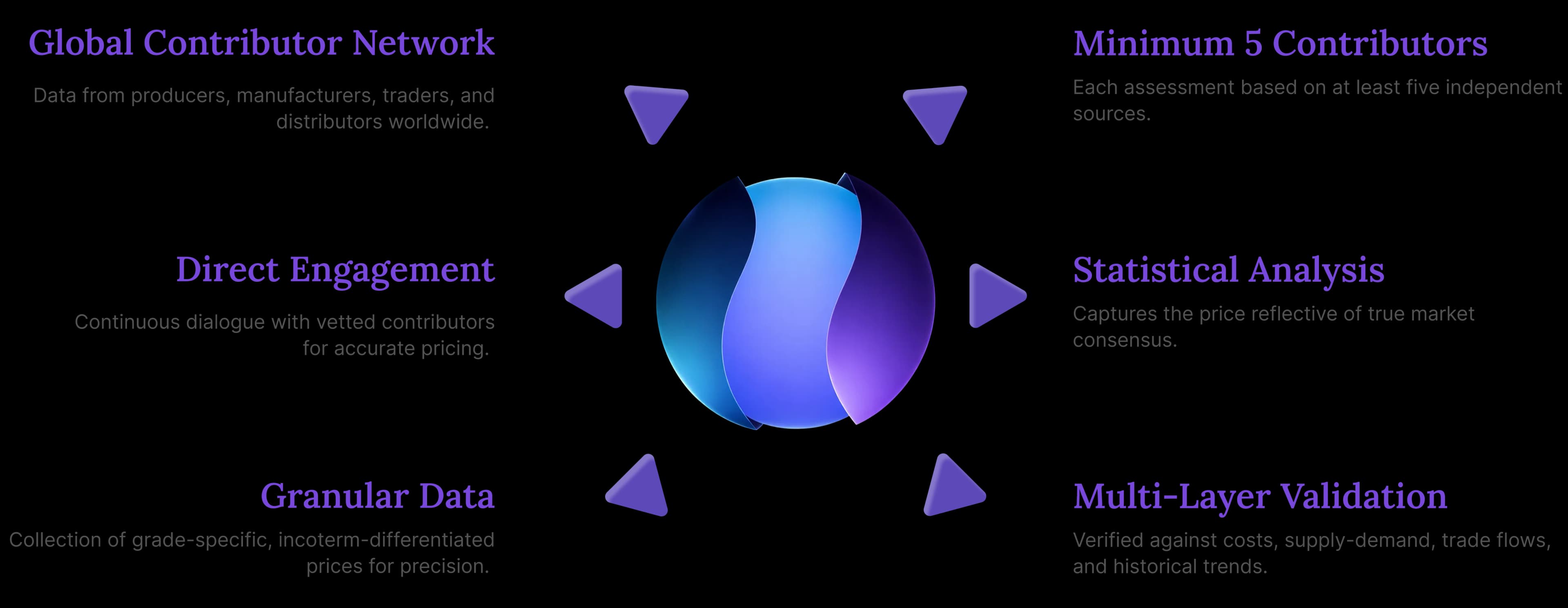
Our Price Analysis Methodology

Schedule A Demo
Experience how Procurement Resource transforms raw material price data into clear, decision ready intelligence. Optimise your performance with reliable, expert market data and analysis. Schedule your demo today to experience a live walk-through where our experts will showcase interactive price charts, forecasted prices, and insights driving the prices for your key commodities, tailored to your workflows. Contact us now!
Our Team will be happy to assist you
We are just a text away
Still Need Help ?
Other Related Reports
Wheat Production via Planting, Fertilizing, Irrigation, Harvesting, Threshing and Winnowing
The study offers a detailed cost analysis of Wheat Production via Planting, Fertilizing, Irrigation, Harvesting, Threshing and Winnowing. In addition, the report incorporates the manufacturing process with detailed process and material flow, operating costs along with financial expenses and depreciation charges.
Durum Wheat Production via Harvesting, Threshing, Winnowing and Storing
The study offers a detailed cost analysis of Durum Wheat Production via Harvesting, Threshing, Winnowing and Storing. In addition, the report incorporates the manufacturing process with detailed process and material flow, operating costs along with financial expenses and depreciation charges.
Milling Wheat Production via Cleaning, Conditioning, Gristing, Separating and Milling
The study offers a detailed cost analysis of Milling Wheat Production via Cleaning, Conditioning, Gristing, Separating and Milling. In addition, the report incorporates the manufacturing process with detailed process and material flow, operating costs along with financial expenses and depreciation charges.
Subscription Plans
Unlock full access to Procurement Resource's price databases, interactive charts, and short-term forecasts for thousands of commodities. Elevate your sourcing decisions by comparing prices across regions, downloading historical data, and layering in analyst-backed insights, all with our flexible plans that scale as your portfolio grows.
Still have any Questions
Contact Us



Price Trend Dashboard - What's Included
Price trends across a diverse portfolio of categories amd products, spanning board to niche chemicas
Coverage extendable to grade-specific chemicals based on procurement requirements
Regular price tracking supported by robust historical datasets
News, policy updates, and key market drivers impacting price movements
Short-term and long-term price outlooks and forecasts
Supply–demand dynamics and capacity-driven market analysis
- Unlimited Users
- Historical Monthly Price
- USA, Europe, APAC Covered
- Monthly Forecast
- 12 Months validity
- News & Events
- 50 Products (Refer Next Page For List)
Related News
View All


Why Procurement Database

Assistance from Experts
Throughout 2024, the Asian acetoin market experienced fluctuating trends with regional variations. Q1 began with moderate price increases driven by supply constraints from Chang Chun Plastics' maintenance shutdown in Taiwan. Post-S...

Client's Satisfaction
Throughout 2024, the Asian acetoin market experienced fluctuating trends with regional variations. Q1 began with moderate price increases driven by supply constraints from Chang Chun Plastics' maintenance shutdown in Taiwan. Post-S...

Assured Collaboration
Throughout 2024, the Asian acetoin market experienced fluctuating trends with regional variations. Q1 began with moderate price increases driven by supply constraints from Chang Chun Plastics' maintenance shutdown in Taiwan. Post-S...
Global Insights
Throughout 2024, the Asian acetoin market experienced fluctuating trends with regional variations. Q1 began with moderate price increases driven by supply constraints from Chang Chun Plastics' maintenance shutdown in Taiwan. Post-S...