Air Freight Price Trend Analysis 2026: Price Drivers, Historical Prices, Latest News, Market Insights & Supply Demand Analysis
Air Freight Price Trend 2025
In 2025, the air freight market showed a mixed price trend with periods of volatility across major trade routes. At the beginning of the year, freight rates moved unevenly as global trade tensions and tariff concerns created uncertainty in shipping activity. Demand from Asia, especially on routes to the United States and Europe, fluctuated after the Lunar New Year, leading to short-term declines in some lanes while others saw slight gains. Trade policy changes and cautious export activity also affected shipment volumes, keeping the market unstable in the early months.
As the year progressed, demand remained moderate, with some recovery in cargo movement from key hubs in Asia and North America. Weather disruptions and holiday-related slowdowns briefly influenced rates, but overall capacity remained sufficient to handle shipments. In the United States, reduced imports from China due to higher tariffs and cautious inventory planning lowered cargo bookings, which limited strong growth in freight rates. Meanwhile, European routes showed small improvements, while Asian lanes continued to experience mixed performance depending on demand and capacity.
Toward the end of 2025, global air freight rates increased slightly during the peak season, supported by stronger activity on major routes from China and North Asia. However, rates still remained below the previous year’s peak, showing that the market was recovering slowly and remained sensitive to trade conditions and global demand.
Our Clients































Procurement Resource Database
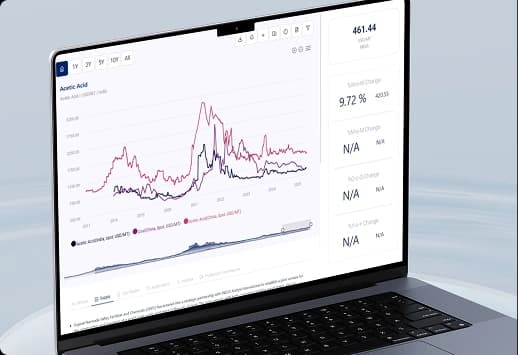
Turn price intelligence into action with the Procurement Resource Database. Log in or subscribe to unlock live price trends, historical charts, supplier databases, cost curves, and analyst-backed insights across chemicals, agriculture, energy, packaging, and more. Use these tools to benchmark your contracts, plan budgets with confidence, and stay ahead of market moves on every product you buy.
Air Freight Dashboard Inclusions

0
+Products
0
+Regions
0
+Subscriptions
In 2024, the air freight market showed a generally firm trend with periods of strong growth. Demand remained steady throughout the year, mainly supported by rising e-commerce shipments from Asia and continued supply chain disruptions in ocean shipping. Many retailers and manufacturers shifted goods from sea to air to avoid delays caused by congestion and longer shipping routes, especially after disruptions in the Red Sea and Suez Canal. This increased pressure on available cargo space and supported higher freight rates across key trade lanes.
During the year, airlines benefited from tight capacity and steady shipment volumes, particularly on routes connecting Asia, Europe, and the United States. Industrial shipments, retail goods, and electronics contributed to stable demand, while strong peak-season activity helped maintain market momentum. At the same time, global economic growth remained moderate, and some regions faced weaker manufacturing activity, which limited excessive price increases. Despite these challenges, improved supply chain stability and better planning by shippers helped the market remain balanced.
By the end of 2024, the air freight sector showed a stable and confident environment, with longer-term contracts becoming more common as businesses expected more predictable supply and demand conditions.
In the second half of 2023, air freight prices experienced considerable volatility across global markets. Early in the period, rates spiked due to strong demand from e-commerce exports, particularly from China, and limited cargo space on key trade routes. Carriers faced high fuel and labor costs, which added pressure on shipping rates. At the same time, supply chains were still recovering from earlier disruptions, and ports in some regions experienced congestion, further tightening capacity and pushing prices higher.
As the months progressed, demand from some industrial sectors softened, partly due to weaker economic activity in major regions like the U.S. and Europe. Businesses reduced inventory purchases, and overall international trade slowed, which led to a gradual easing of freight rates. Despite the high costs, carriers continued to maintain service levels, and companies increasingly sought innovative solutions such as combined sea-air transport to balance cost and transit time.
Toward the end of the period, air freight prices stabilized, with carriers and shippers adjusting to market conditions. Seasonal shipping patterns, including peak holiday demand, temporarily supported rates, but overall, the market showed signs of moderation.
This year, growth in global merchandise exports is anticipated to decelerate slightly. The weak demand posed to be a problem for the air cargo sector. As a result, the demand for air cargo in the first two quarters of 2023 remained below that observed in the same period of 2022. The decline in demand for air freight and global trade is majorly caused by inflation. The rising cost of raw materials and services influenced the air freight industry as it caused a reduction in purchasing power and lower rates of consumption. As a result, in the first and second quarters of 2023, the air cargo sector remained weak and faced seasonal swings, given the economic difficulties.
Air freight for commodity transport had a lukewarm run in H2 2022. The air freight market considerably downsized compared to the same time in the previous year. But the operational costs and price trend remained on a high ride throughout the H2 2022.
In the Asian market, strict zero covid policies in China in the middle of the year proved detrimental to the air freight market. Very strict norms and restrictions on movement strangled it and the industrial shutdown choked it further. Reduction in business operations resulted in an overall reduced need for commodity transfer.
For Europe the worst economic nightmare since the great depression was unveiled in the form of the Russia-Ukraine crisis. A major war in the backyard cost money, and energy security got severely hampered, as all Russian supplies were immediately seized.
The sanctions imposed on Russia in turn unfolded an energy crisis that Europe didn’t prepare for, resulting in skyrocketed energy prices. As fuel prices went up the operation costs for aviation too went up. Eventually leading to an inclined air freight price trend in Europe.
The global economic situation did influence America too. Even though the USA is secured with energy, refining capacity was still affected resulting in increased jet crack spread (difference between crude oil and jet oil prices). Overall costs were high with decreased demand. Air freight price trend remained high rising.
The demand for air freight is generally governed by cost; air freight and air cargo prices are usually 5 times the road shipment and10-12 times the sea cargo. Sanctions related to economic activity, surging crude oil prices, and current geopolitical uncertainties took a toll on air freight prices.
Disruptions in the Chinese market owing to zero-tolerance covid protocol and the avoidance of Russian airspace by many countries spiked the air freight prices on China-Europe routes. Despite these bottlenecks, the price trend for air freight remained strong. Air freight prices increased by 11.7% compared to 2019 levels and around 4% compared to 2021 levels.
About Air Freight
Air Freight refers to the shipment of freight or cargo via airfreight carriers or cargo airlines, that are primarily dedicated to the transportation of cargo by air. These cargo airlines may be charter or commercial and some of these are in fact the divisions or subsidiaries of larger passenger airlines. Some examples of these cargo airlines are – FedEx Express, Emirates SkyCargo, etc. The Air Freight is the fastest mode of transporting the goods and is the best available option for shipping perishable items in short time over large distances.
Air Freight Product Details
| Report Features | Details |
| Product Name | Air Freight |
| Region/Countries Covered | Asia Pacific: China, India, Indonesia, Pakistan, Bangladesh, Japan, Philippines, Vietnam, Iran, Thailand, South Korea, Iraq, Saudi Arabia, Malaysia, Nepal, Taiwan, Sri Lanka, UAE, Israel, Hongkong, Singapore, Oman, Kuwait, Qatar, Australia, and New Zealand Europe: Germany, France, United Kingdom, Italy, Spain, Russia, Turkey, Netherlands, Poland, Sweden, Belgium, Austria, Ireland Switzerland, Norway, Denmark, Romania, Finland, Czech Republic, Portugal and Greece North America: United States and Canada Latin America: Brazil, Mexico, Argentina, Columbia, Chile, Ecuador, and Peru Africa: South Africa, Nigeria, Egypt, Algeria, Morocco |
| Currency | US$ (Data can also be provided in local currency) |
| Supplier Database Availability | Yes |
| Customization Scope | The report can be customized as per the requirements of the customer |
| Post-Sale Analyst Support | 360-degree analyst support after report delivery |
Note: Our supplier search experts can assist your procurement teams in compiling and validating a list of suppliers indicating they have products, services, and capabilities that meet your company's needs.
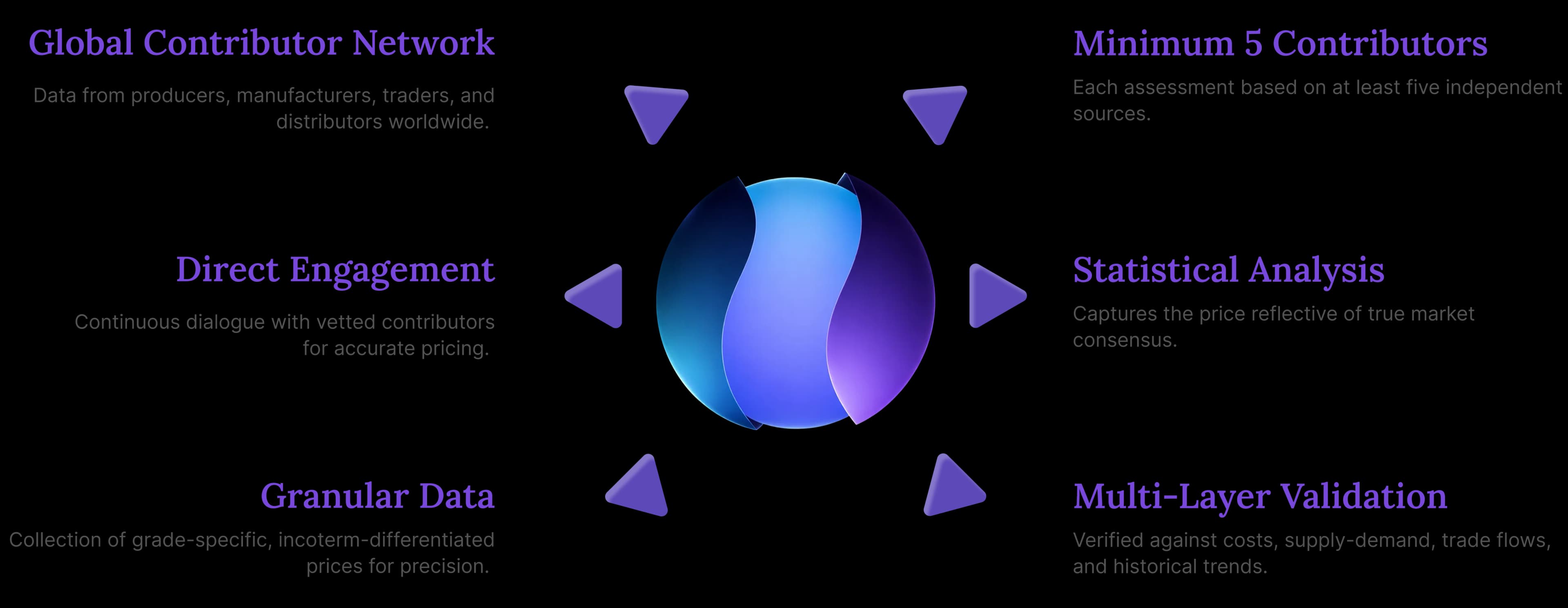
Our Price Analysis Methodology

Schedule A Demo
Experience how Procurement Resource transforms raw material price data into clear, decision ready intelligence. Optimise your performance with reliable, expert market data and analysis. Schedule your demo today to experience a live walk-through where our experts will showcase interactive price charts, forecasted prices, and insights driving the prices for your key commodities, tailored to your workflows. Contact us now!
Our Team will be happy to assist you
We are just a text away
Still Need Help ?
Other Related Reports
Itaconic Acid Production From Aerobic Microbial Fermentation
The study offers a detailed cost analysis of Itaconic acid production via aerobic microbial fermentation.
Nitrogen Production from Air
The report involves the cost analysis of production of nitrogen by the fractional distillation of liquid air using distillation columns under cryogenic conditions.
Subscription Plans
Unlock full access to Procurement Resource's price databases, interactive charts, and short-term forecasts for thousands of commodities. Elevate your sourcing decisions by comparing prices across regions, downloading historical data, and layering in analyst-backed insights, all with our flexible plans that scale as your portfolio grows.
Still have any Questions
Contact Us



Price Trend Dashboard - What's Included
Price trends across a diverse portfolio of categories amd products, spanning board to niche chemicas
Coverage extendable to grade-specific chemicals based on procurement requirements
Regular price tracking supported by robust historical datasets
News, policy updates, and key market drivers impacting price movements
Short-term and long-term price outlooks and forecasts
Supply–demand dynamics and capacity-driven market analysis
- Unlimited Users
- Historical Monthly Price
- USA, Europe, APAC Covered
- Monthly Forecast
- 12 Months validity
- News & Events
- 50 Products (Refer Next Page For List)
Related News
View All


Why Procurement Database

Assistance from Experts
Throughout 2024, the Asian acetoin market experienced fluctuating trends with regional variations. Q1 began with moderate price increases driven by supply constraints from Chang Chun Plastics' maintenance shutdown in Taiwan. Post-S...

Client's Satisfaction
Throughout 2024, the Asian acetoin market experienced fluctuating trends with regional variations. Q1 began with moderate price increases driven by supply constraints from Chang Chun Plastics' maintenance shutdown in Taiwan. Post-S...

Assured Collaboration
Throughout 2024, the Asian acetoin market experienced fluctuating trends with regional variations. Q1 began with moderate price increases driven by supply constraints from Chang Chun Plastics' maintenance shutdown in Taiwan. Post-S...
Global Insights
Throughout 2024, the Asian acetoin market experienced fluctuating trends with regional variations. Q1 began with moderate price increases driven by supply constraints from Chang Chun Plastics' maintenance shutdown in Taiwan. Post-S...